14.11.2026
Wide-Leg Trousers for Men: Why Fit Matters More Than Fabric
Wide-Leg Trousers for Men: Why Fit Matters More Than Fabric
By Vlad Bykov, Founder and Couturier, VLAD BYKOV Couturier House, Dubai · Published 14 November 2026
Wide-leg trousers for men should fit closely at the waist and seat, sit at a rise that suits your proportions, fall straight from the hip without pulling, and end with little or no break over the shoe. Fit decides whether the volume looks deliberate or careless; the fabric only decides how that volume moves.
How should wide-leg trousers fit a man?
Close at the waist and seat, free from the thigh down. The waistband sits flat without a belt doing the work, the rise reaches your natural waist or just below, the seat is clean, and from the fullest part of the thigh the leg falls in a straight column to a hem that rests lightly on the shoe.
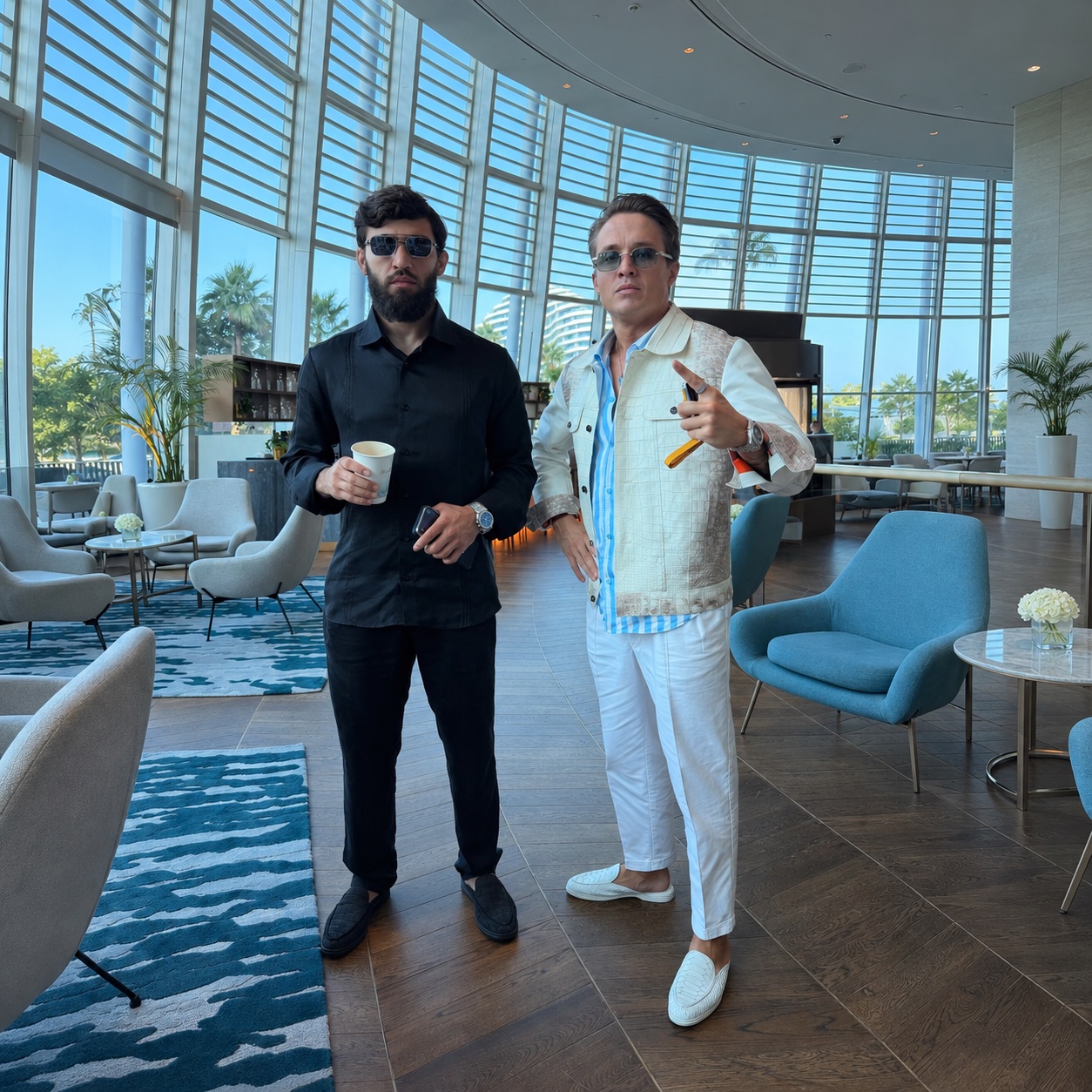
Fabric is not one of the ten lines. Every check in the table is decided by the cut and by the man who wears it; the cloth enters the conversation once they are settled. Try trousers on with the shoes you intend to wear, stand in front of a long mirror, turn sideways, then sit down: most faults show within a minute.
Why does fit matter more than fabric in wide-leg trousers?
Because a wide leg magnifies every fitting error. The volume draws the eye down and outward, so a gaping waist, a dropped crotch or a hem pooling on the shoe becomes the first thing anyone sees. An excellent cloth cut to the wrong proportions still reads as an ill-fitting trouser that happens to be wide.
The common assumption runs the other way: a looser trouser should forgive what a slim one exposes. In practice a slim trouser has little cloth to show a fault, while a wide leg is a larger surface and shows every pull and fold.
Width alone has been tried before. In the mid-1920s Oxford undergraduates wore Oxford bags, trousers that measured 22 to 23 inches (56 to 58 cm) around the hem at first and grew to 44 inches (110 cm) or more. There, width was an end in itself. A modern wide trouser is measured against the man who wears it.
None of this makes fabric unimportant: the cloth gives a trouser its character, and the cut gives that character a shape. That is why I treat wide trousers as a fit-first commission: the proportions are settled first, the cloth second.
How tight should the waist be on wide-leg trousers?
Close enough that the trousers stay where they belong without a belt, loose enough that you can sit through a long dinner. A flat hand should slide inside the waistband and no more. If the back gapes when you sit, or a belt has to gather the cloth, the waist is wrong and the whole leg hangs crooked from it.
In a wide trouser the waist is the anchor. A waistband that is slightly loose does not stay a small fault: the trousers drop, the crotch follows, and the hem lands lower and heavier on the shoe.
Support is a matter of taste. Suit trousers were traditionally held up by braces, still the preferred method in classical British tailoring; side adjusters keep the waist just as clean. A belt is best as an accent: a crocodile belt on a waist that already fits looks deliberate.
When buying ready-made, look inside the back seam: better trousers often keep a reserve of cloth there, which a tailor can release later to widen the waist.
What rise should wide-leg trousers have?
A mid to high rise, reaching the natural waist or just below the navel. A higher waistband lets the wide leg start from the hip and fall in one line, and it lengthens the leg visually. A low rise drops the crotch, shortens the leg and makes the same volume look as if the trousers were a size too big.
The rise runs from the crotch seam to the top of the waistband, and in a wide trouser it decides more than any other measurement. A higher waistband also lets you tuck in a shirt or a knit and show a clean line at the waist, which balances the width below.
The right rise is personal. It depends on the length of your torso, how you carry your weight and how you like a shirt to sit. What matters is that the crotch sits close to the body. Check the rise first whenever you try trousers on: it is the one measurement a tailor can barely change afterwards.
How much room should the seat and thigh have?
Enough to sit, climb stairs and cross your legs without strain, and no more across the seat. Stand sideways to a mirror: the cloth should run smooth over the seat, with no horizontal pull lines beneath it and no loose fold of fabric below it. From the fullest part of the thigh, the leg should drop straight.
The seat is where most ready-made wide trousers fail. Too tight, and the side pockets flare open. Too loose, and a fold of cloth hangs below the seat, which turns a tailored trouser into a baggy one from behind.
The thigh is where the width begins. On a true wide leg the trouser is fullest at the thigh and keeps that width all the way down: it should not grip the thigh and then widen, and it should not narrow at the knee.
Should wide-leg trousers have a break?
Little or none. A wide hem has more cloth to collapse, so a full break pools and makes the trousers look unfinished. Cut them to touch the top of the shoe at the front with at most a slight break, and let the back of the hem sit just above where the heel meets the sole.
The break is the fold that forms where the trouser rests on the shoe. Proper Cloth's guide to trouser breaks describes the full break, with plenty of cloth folding at the ankle, as the traditional option for looser trousers. On a modern wide leg I prefer the opposite: the hem already carries a lot of cloth, and letting it collapse adds weight exactly where the line should end cleanly.
The hem itself should be close to the width at the knee, so the leg falls as a column, and in proportion to you: a narrow frame in a very wide hem looks as if the trousers belonged to someone else. Turn-ups, a hem rolled outward and pressed or stitched in place, add weight at the bottom, so a wide leg hangs straighter as you walk.
How long should wide-leg trousers be with mules and loafers?
Hem them for the shoes you will wear most. With mules, the back of the hem must clear the open heel and the front can end at the top of the foot; with loafers, the front of the hem touches the vamp. Sneakers with a thicker sole sit higher and allow the hem to rest a little lower.
Mules are the strictest case: the heel is open, so a hem that is even slightly long catches on it. In Modern Sprezzatura I described the base look this way: "Mules in suede or crocodile set the tone: with them, loose linen trousers with a light break or none, a shirt with no button at the collar or a silk polo, and over it a soft unlined jacket."
Loafers allow a slightly longer hem, with the back still clear of the heel. Crocodile tightens the rule, because the scale rows across the vamp are the point of the shoe; I set out those details in the guide on how to wear crocodile shoes with a suit. If you alternate between mules and loafers, cut for the mules and accept a little more ankle with loafers.
What shoes to wear with wide-leg trousers?
Shoes with enough presence to hold the hem: loafers, mules and clean leather sneakers with a visible sole. A slim, pointed dress shoe disappears under a wide leg and makes the foot look small. Choose suede or matte crocodile by day, glazed crocodile in the evening, and keep the shoe in the trousers' colour family.
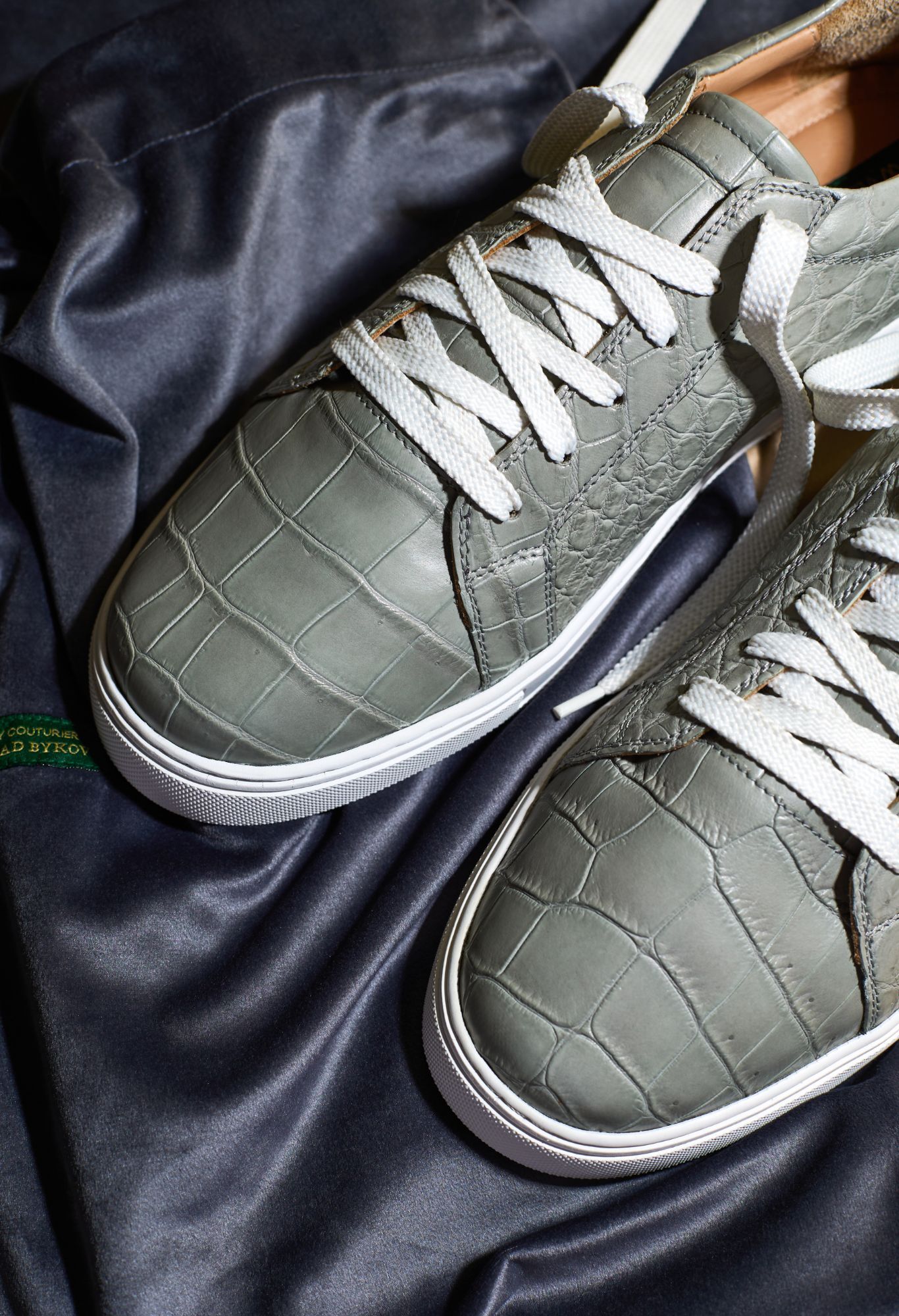
A wide hem needs a shoe that holds the ground: a rounded or almond toe, a visible sole, a vamp with some surface to it. Italian suede, nubuck and crocodile do this well, because texture reads as substance even on a light shoe. In Modern Sprezzatura the look starts from the shoes, and with wide trousers that is literal: the hem width and the length follow the pair you choose.
Mules in Italian suede or crocodile suit linen and light wool in warm weather; loafers suit wool, blends and anything with a jacket. For Petr Yan's look, the House paired wide-leg trousers with handcrafted semi-matte crocodile sneakers in Gray on white Italian soles: the grey echoed the colour transitions of his Himalaya crocodile vest, and the white soles kept the look relaxed.
Pleated or flat-front: which wide-leg trousers should you choose?
Pleats, for most wide-leg trousers. A pleat adds cloth at the hip and thigh exactly where a wide leg needs it, so the trousers fall straight when you stand and still give room when you sit. Flat fronts suit light linen. Whatever you choose, a pleat that opens when you stand means the waist or seat is too tight.
Trousers can carry one, two, three or no pleats, facing either direction: reverse pleats open toward the pockets and are typical of most trousers today, while forward pleats open toward the fly. A single pleat is the quieter choice; a double pleat gives more volume and belongs to a fuller leg in wool.
Pleats are also a fit test. If they lie closed and the crease runs straight from the pleat to the hem, the trousers fit. Some cloths hold that crease better than others: gabardine, as I wrote about that weave, holds "a crease along trousers with a precision that few other weaves can match".
Which fabric suits wide-leg trousers in each climate?
Mid-weight wool for most of the year, linen for real heat, and silk in a blend for evenings, but only once the fit is settled. Wool holds a crease and recovers after sitting; linen breathes and creases; silk drapes and shines but stretches. Blends, such as wool, linen and silk together, borrow something from each.
The Woolmark Company describes each Merino fibre as working like a coiled spring that returns to its shape after being bent, which gives wool its natural resistance to wrinkles: a wool leg recovers its line after a long dinner. According to the Discover Natural Fibres Initiative, flax is more crystalline than cotton, which makes it crisper, stiffer and more easily wrinkled, and its fibres absorb and release water quickly; I wrote separately about caring for a linen suit in a humid climate.
Silk's elasticity is moderate to poor: once stretched even slightly, it stays stretched, so pure silk trousers lose their shape at the knee and seat. In a blend, wool or linen keeps the shape and silk adds the sheen, the same logic as in my guide to the silk suit. As I wrote in the Loro Piana essay, weight matters as much as fibre: "Lighter fabrics ask for a different kind of confidence — they must hold their shape without the help of density, relying instead on weave and finish to keep their composure through a warm afternoon."
What should you wear with wide-leg trousers?
A closer top that balances the volume below: a tucked-in shirt, a silk polo, a fine knit or a short, soft jacket. Keep the line at the waist visible, the palette calm and one piece as the accent. A loose top over loose trousers erases the waist, and the proportions disappear with it.
Tuck it in: the waist is where a wide-leg look is read. A silk T-shirt or polo from the Pure Silk 100% collection keeps the top close without looking tight. Jackets should be short and soft; a long, structured jacket over wide trousers turns the figure into a heavy rectangle.
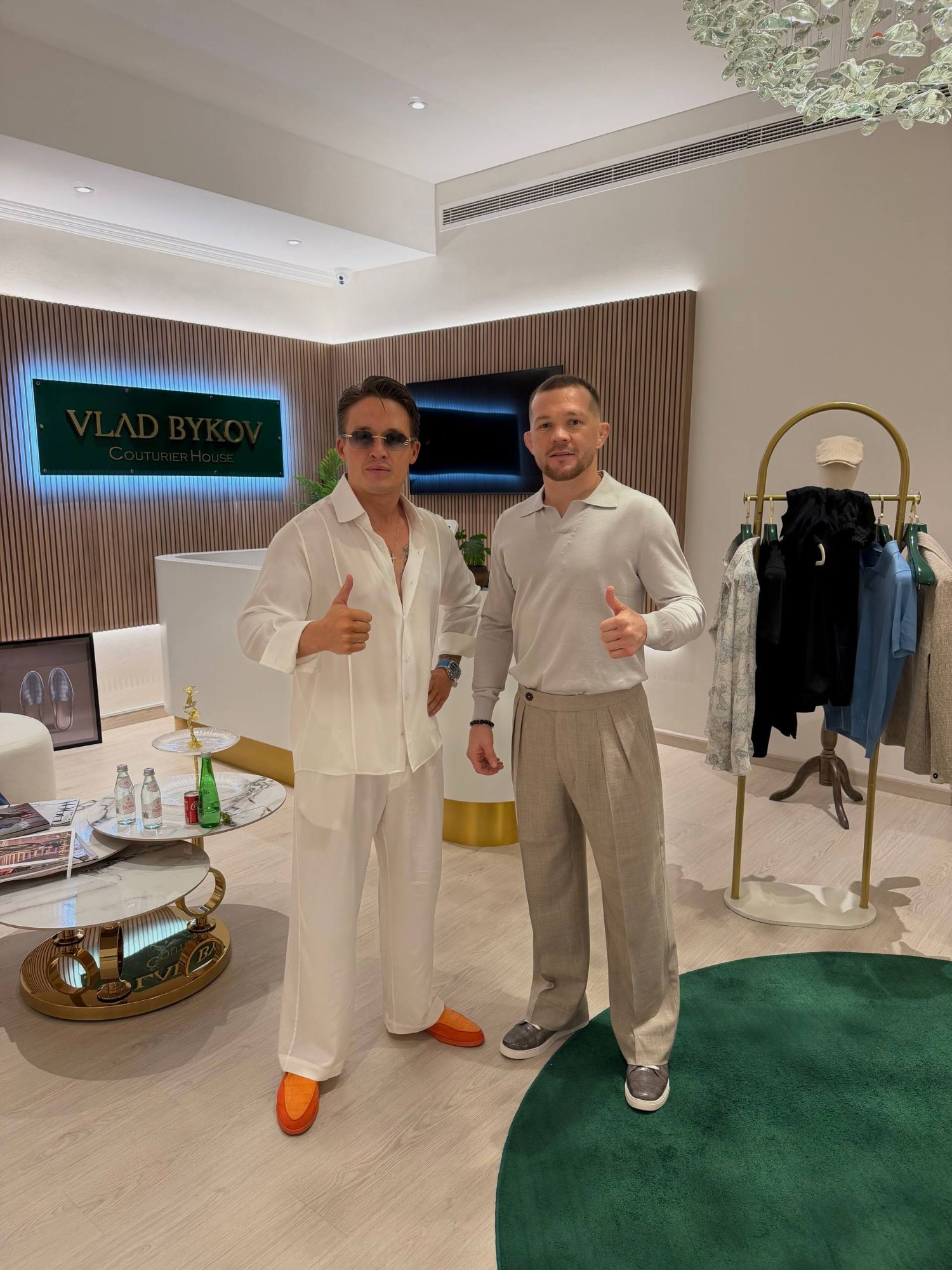
A vest works too. For Petr Yan we paired the wide-leg trousers with a Himalaya crocodile vest over a light beige silk and cotton long-sleeve top. The colour rule of Modern Sprezzatura holds here as well: a warm natural palette and a single accent for the whole look.

Why are wide-leg trousers part of Modern Sprezzatura?
Because they deliver what the philosophy promises: ease of movement and a relaxed look built on precise work. In the House's words, Modern Sprezzatura is contemporary elegance, where beautiful proportions, ease of movement and an effortless appearance come together through thoughtful work on shape and fit. A wide leg that fits is exactly that.
The word comes from Baldassare Castiglione's The Book of the Courtier, published in 1528, where sprezzatura is a nonchalance that conceals all art and makes difficult things look easy. Modern Sprezzatura knows the rules well enough to break them. A wide trouser is one of those rules broken on purpose, and it only works when the rules underneath it are kept: the waist, the rise and the hem.
For Petr Yan's look ahead of UFC 333, we chose wide-leg trousers in Italian LP fabric that blends wool, linen and silk. They brought volume and freedom to a look built around a crocodile vest because the waist, the length and the line were right.
Off the rack or bespoke: how do you get wide-leg trousers that fit?
Buy off the rack only if the waist, rise and seat already fit, because a tailor can shorten, take in and narrow, but can hardly add rise or seat. If they do not, made-to-measure or bespoke builds the trousers around you. At the House, made-to-measure clothing takes about three to four weeks, and each commission is priced on request.
Made-to-measure takes an existing trouser pattern and adapts it to your measurements: the model stays the same, the fit becomes yours. Bespoke builds the fit and construction around you from the start, including the rise, the pleats, the hem width and the length for your shoes. A commission at VLAD BYKOV Couturier House begins with a consultation in person in Dubai or by video call, and I begin it by asking how you spend your day, what you already wear, which colours feel natural to you and what the trousers should do for you.
Wide-leg trousers at the House are made to order through Bespoke. The price depends on the cloth and the format: write to an advisor through Contact or WhatsApp with the trousers you have in mind and the shoes you will wear them with, and the price is confirmed before payment.
Frequently Asked Questions
What is the difference between wide-leg and baggy trousers?
Wide-leg trousers are tailored above and free below: they fit at the waist, seat and hip, then fall straight and full. Baggy trousers are loose everywhere, including the waist and seat, so the volume has no anchor and the line collapses.
Can short men wear wide-leg trousers?
Yes, with three adjustments: a higher rise to lengthen the leg, a moderate width, and no break, so the hem meets the shoe cleanly. Keeping trousers and shoes in one colour family avoids cutting the leg at the ankle.
Do wide-leg trousers make you look bigger?
Only when they fit badly. Volume without a defined waist adds bulk; volume that starts from a precise waist and falls straight reads as length. Balance it with a closer top and a shoe with some presence, and the figure looks taller, not wider.
Should wide-leg trousers have a crease?
In wool and most blends, yes: a pressed crease from the waist or the pleat down to the hem lengthens the leg and keeps the volume orderly. In linen a soft crease or none suits the cloth, which creases on its own anyway.
Can you wear wide-leg trousers to the office?
Yes, in a quiet cloth such as mid-weight wool, with a matching or soft jacket, a pressed crease and loafers. Keep the width moderate and the break minimal. The more formal the setting, the more precisely the waist and length must fit.
Are wide-leg trousers good for hot weather?
Yes. A wider leg keeps cloth away from the skin and lets air move with every step, which is why it suits Dubai or Miami. Choose linen, light wool or a blend with linen, and keep the hem clear of the ground.
Should you wear socks with wide-leg trousers and mules?
Usually no: mules are worn without visible socks, and the open heel is part of their look. With loafers in heat, go bare-ankled or use an invisible liner; in cooler weather, a fine sock in the trousers' tone keeps the line unbroken.
How do you measure trouser rise?
Lay the trousers flat and measure the front rise from the crotch seam to the top of the waistband. Compare it with a pair that already sits where you like it. For wide-leg trousers, a longer rise usually looks better than a shorter one.
How long does it take to make made-to-measure trousers at VLAD BYKOV?
Made-to-measure clothing at VLAD BYKOV Couturier House takes about three to four weeks. It begins with a consultation in Dubai or by video call, where the cloth, the rise, the pleats and the length are agreed before cutting.
How much do bespoke wide-leg trousers cost at VLAD BYKOV?
They are priced on request, because the cost depends on the cloth and on the format, made-to-measure or bespoke. Both are agreed at the consultation in Dubai or by video call, and the price is confirmed before payment.
Written at VLAD BYKOV Couturier House, Dubai. About the House · Ready-to-Wear · Commission a bespoke piece · Contact · Privacy Policy
Loro Piana, UFC, The Woolmark Company, Proper Cloth and other names mentioned in this article belong to their respective owners and are referenced for context only. Mention does not imply partnership, licence or endorsement.