10.11.2026
How to Wear a Silk Suit Without Looking Like Pyjamas: A Couturier's Guide for Men
How to Wear a Silk Suit Without Looking Like Pyjamas: A Couturier's Guide for Men
By Vlad Bykov, Founder and Couturier, VLAD BYKOV Couturier House, Dubai · Published 10 November 2026
To wear a silk suit without the pyjama look, choose a cloth with body, such as silk-wool, shantung or dupioni, over fluid, glossy silk. Give the jacket a defined shoulder and a canvas front, keep one point of shine in the look, wear a knit polo or a collared shirt beneath, and finish with structured crocodile loafers or mules.
How should a man wear a silk suit?
As tailoring first and silk second. Six decisions separate an evening suit from loungewear: the weight and body of the cloth, the level of sheen, the construction of the jacket, what you wear beneath it, the colour and the shoes. Get the cloth and the construction right, and the other four decisions become easy.
The rest of this guide takes each decision in turn, then where to wear the suit this winter, from a terrace in Dubai to a New Year reception.
Why can a silk suit look like pyjamas?
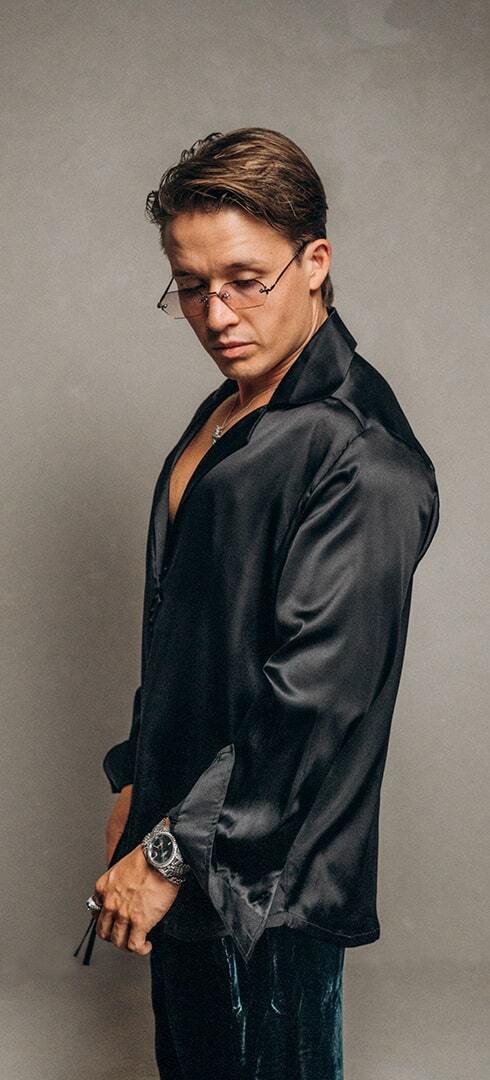
Because the two qualities that make silk beautiful, its sheen and its fluid drape, are also the signature of silk sleepwear. Silk fibres have flat facets that bounce light back in many directions, and a light silk falls close to the body. Add soft shoulders and a matching soft top, and the eye reads a pyjama set.
The physics is simple. The natural sheen comes from those flat facets of the fibre scattering light, and the same fibre has little spring: pull it even slightly and it keeps the stretch. On a suit, that shows first at the knees and elbows, where a fluid silk soon takes the shape of the man sitting in it.
Three cues together make the pyjama look: a uniform shine, a liquid drape and a shapeless top half. Remove any two and the suit reads as tailoring again. That is why everything that follows is about cloth, construction and contrast.
Were men's suits ever made of silk?
Yes. For much of the eighteenth century, silk was the cloth of formal menswear at the European courts. The Metropolitan Museum of Art has shown a French habit à la française of the 1780s in embroidered silk and a court suit of 1774–93 in silk velvet. Sober wool took over only after what historians call the Great Male Renunciation.
The term was coined by the British psychologist John Flügel in 1930 for the moment, at the end of the eighteenth century, when wealthy men in the West turned away from bright colour, ornate cut and showy variety in their clothes. The dark suit that followed has shaped men's dress codes ever since, and silk retreated to ties, linings, lapel facings and the bedroom.
Look closely at the Met's court suit: what seems brown is a velvet woven on red silk, crossed by narrow stripes of black pile. So a silk suit today carries two references, the court and the bedroom, and a cloth with body worn with structure points it firmly at the first.
Which silk fabrics work best for a suit?
Silk-wool is the most versatile and the most formal; silk-linen is the driest and suits warm evenings; shantung and dupioni have a crisp body and slubs that break up the shine; smooth pure silk has the most sheen and needs the strictest styling. Noil, often sold as raw silk, is matte enough to pass for cotton by day.
Shantung, a plain-weave silk that originated in China's Shandong province, has small knots and slubs in its yarn. In dupioni, the weft is an irregular yarn reeled from cocoons that grew tangled together, laid across a fine, even warp: the cloth is thicker and heavier than shantung, more slubbed, and shimmers in two tones when warp and weft are dyed differently. Brides and formal occasions favour both, and both have the body a jacket needs.
Noil is spun from the short fibres combed out of silk, which gives a nubby, matte cloth closer to cotton than to the silk most people picture. Blends behave like their dominant fibre: a suit that is mostly wool with a share of silk reads as wool with a glow.
Weight matters as much as weave. For a suit, choose the heavier weight a cloth comes in: a jacket needs cloth that holds a line when you stand and recovers when you move.
Pure silk or a silk blend: which suit should you choose?
For a first silk suit, a blend. Silk-wool keeps the glow of silk and adds the body and recovery of wool, so it holds a crease, sheds wrinkles and moves from a dinner to a meeting. Pure silk is the second suit: the one for an occasion, when you want the shine and will style everything around it.
Strong as the fibre is, wet silk can be up to a fifth weaker, and it recovers poorly from stretching. Wool brings the spring that silk lacks. Linen brings dryness and a visible texture, along with creases of its own.
The House works with all three fibres together. For Petr Yan's look at the press conference ahead of UFC 333, we chose wide-leg trousers in Italian LP fabric blending wool, linen and silk, worn with a light beige silk and cotton long-sleeve top from the new collection. A blend like this has the line of tailoring and the movement of silk, without the shine of either.
The climate decides the proportions. A linen-rich cloth suits a humid evening, and creases; how to look after a linen suit in a humid climate is its own discipline. A wool-rich cloth suits an air-conditioned dinner or a European December.

How do you keep the shine of a silk suit under control?
Allow one point of shine in the whole look and make everything else matte. If the suit glows, wear a matte knit beneath it and matte crocodile or suede on your feet. If the suit is dry and textured, the shine can come from glazed crocodile loafers, a silk pocket square or the watch, but from one of them only.
In my essay on Modern Sprezzatura I set out the evening version of the look in a few lines: "For the evening the principle is the same and only the material changes. A relaxed suit in linen or silk, crocodile mules or loafers, nothing at the neck. Metals in agreement: watch, buckle, buttons. One point of shine, not several." I wrote it for the whole wardrobe, and silk is where it matters most.
Check the cloth under the light you will wear it in. Silk changes more than any other suiting between daylight and the warm light of a restaurant, where a medium sheen can read as high. A twill or a slubbed weave breaks the light up; a smooth weave reflects it in a single sheet. When in doubt between two cloths, take the one with more texture.
"Relaxed" in that line describes how the suit is worn. Silk has less body than wool, so even a soft silk jacket needs a canvas through the chest and a clean shoulder line.
Which colours work best for a silk suit?
For evening, deep tones: midnight navy, charcoal, chocolate, bottle green and black. They hold the sheen and keep it quiet. For warm evenings and daytime, pale colours with a dry texture: ivory, sand, stone, desert. The riskiest combination is a pale, glossy silk worn from head to toe, which is exactly what silk pyjamas look like.
Pale silk shows every change of light, so it needs the most texture: an ivory silk-linen or a sand-coloured shantung, never an ivory satin. Evening dress has a precedent for pale tailoring in heat: off-white dinner jackets have long belonged to hot-weather evenings, and their lapels are faced in the jacket's own cloth.
Build the colour from the knit outwards. The House's silk polo comes in twelve colourways, among them black, navy, ivory, desert, beige and plum, and a polo one shade lighter or darker than the suit is the simplest evening look there is: one family of colour, two textures.
What do you wear under a silk suit jacket?
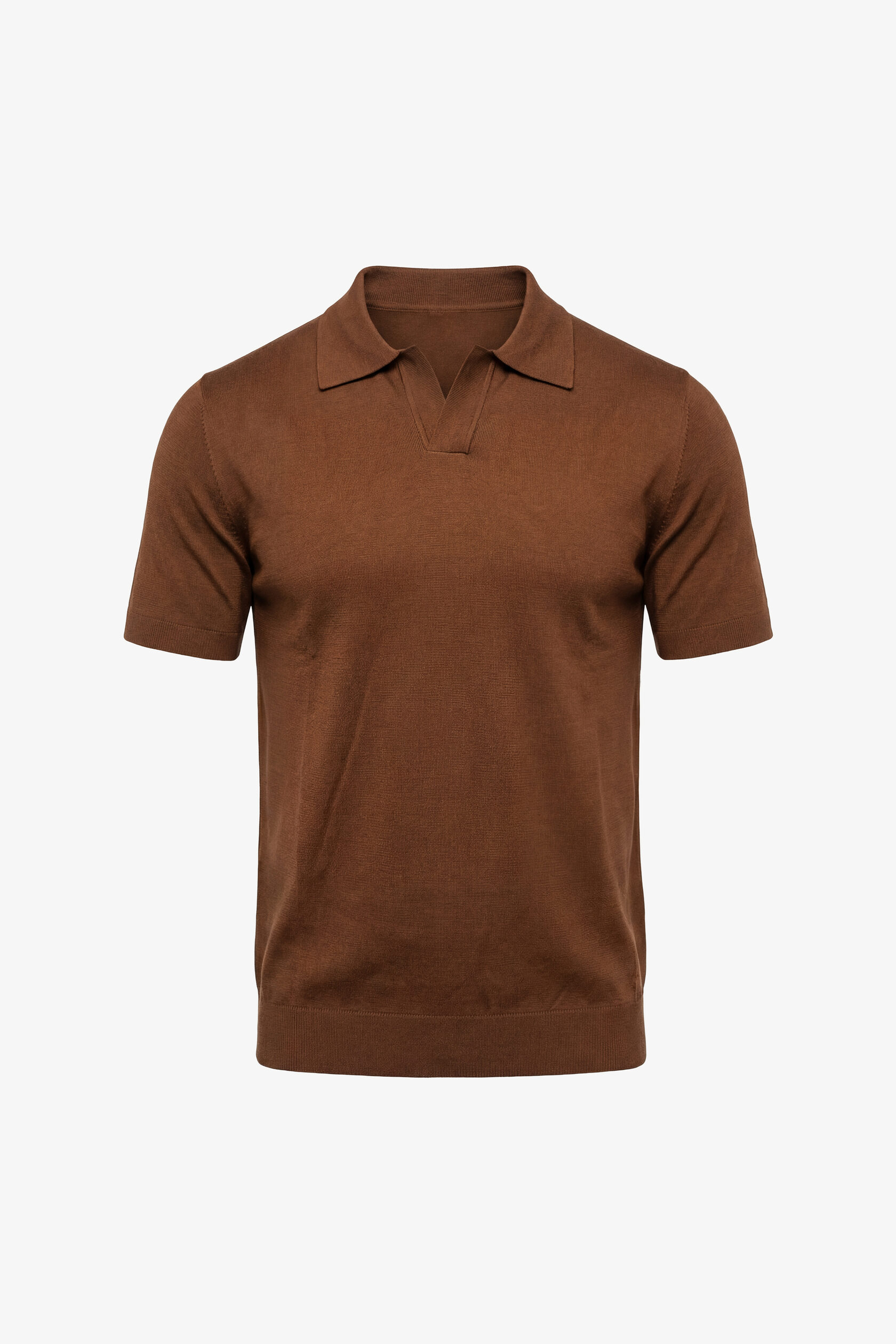
A fine knit polo, a knitted V-neck or a shirt whose collar stands on its own. The layer beneath should contrast with the suit in texture, matte under shiny, so the jacket keeps its outline. A second fluid silk top with the same sheen as the suit is the fastest way to the pyjama look, whatever the cut.
Knitwear does this best, because a knit is matte by construction. The polo of our Pure Silk 100% collection is made in 100% Italian silk with an open V-neck and a soft matte-pearl sheen. It follows the line of the body, and it is held in stock in sizes M to 4XL or made to individual measurements on request.
With a silk-linen or noil suit, a plain, close-fitting T-shirt works for daytime and travel. With silk-wool, shantung or dupioni in the evening, choose a polo or a shirt. A tie is optional; nothing at the neck is the more modern answer, and the one I prefer with silk.
How do you wear a silk jacket on its own?
As an evening jacket, with trousers in a different, flatter cloth: dark wool, fine cotton or wool-linen. A silk-wool or shantung jacket worn this way reads like a modern dinner jacket. Keep the trousers darker or plainer than the jacket, so the silk stays the one point of texture and shine in the look.
This is the easiest way into silk for a man who is not yet sure about a full suit. A deep blue or bottle-green silk jacket over charcoal trousers and a black knit polo works from a gallery opening to a late dinner. Pale silk jackets belong to warm evenings, with sand or stone trousers and suede mules.
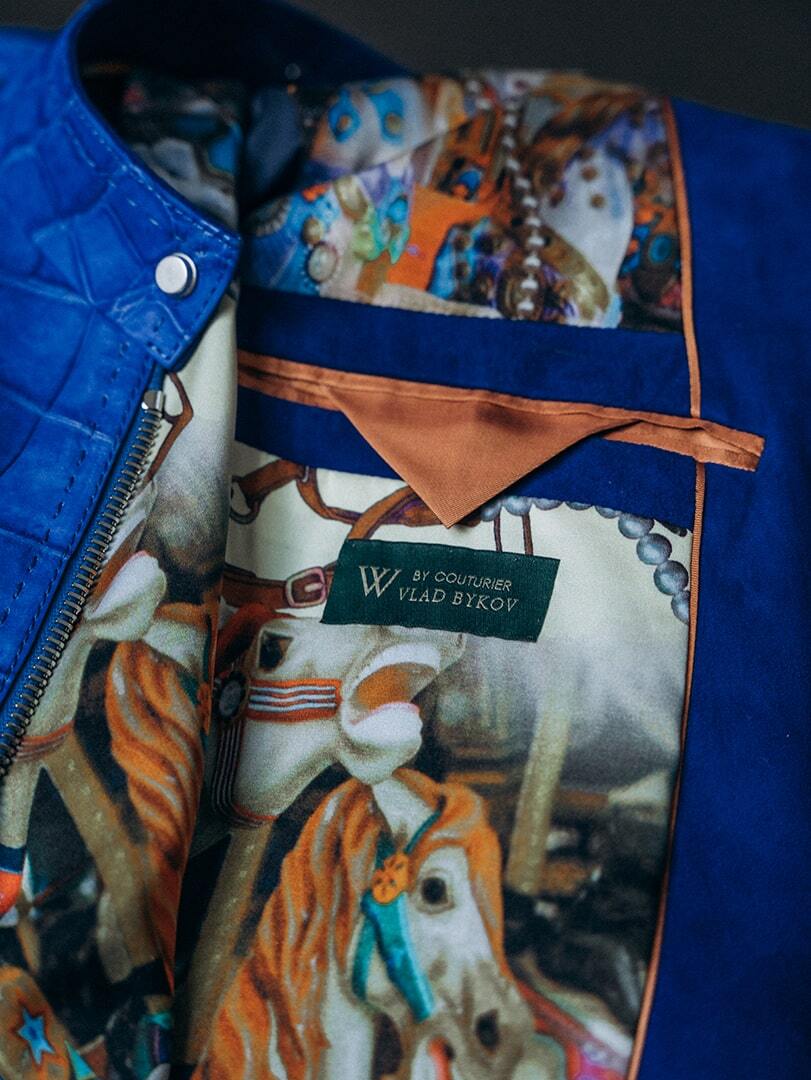
A silk jacket is often worn open, so its lining is seen more than in wool and deserves as much thought as the cloth. Inside one of our crocodile leather jackets the lining is printed silk, with the label By Couturier VLAD BYKOV: a detail that shows only when the jacket moves.
Which shoes go with a silk suit?
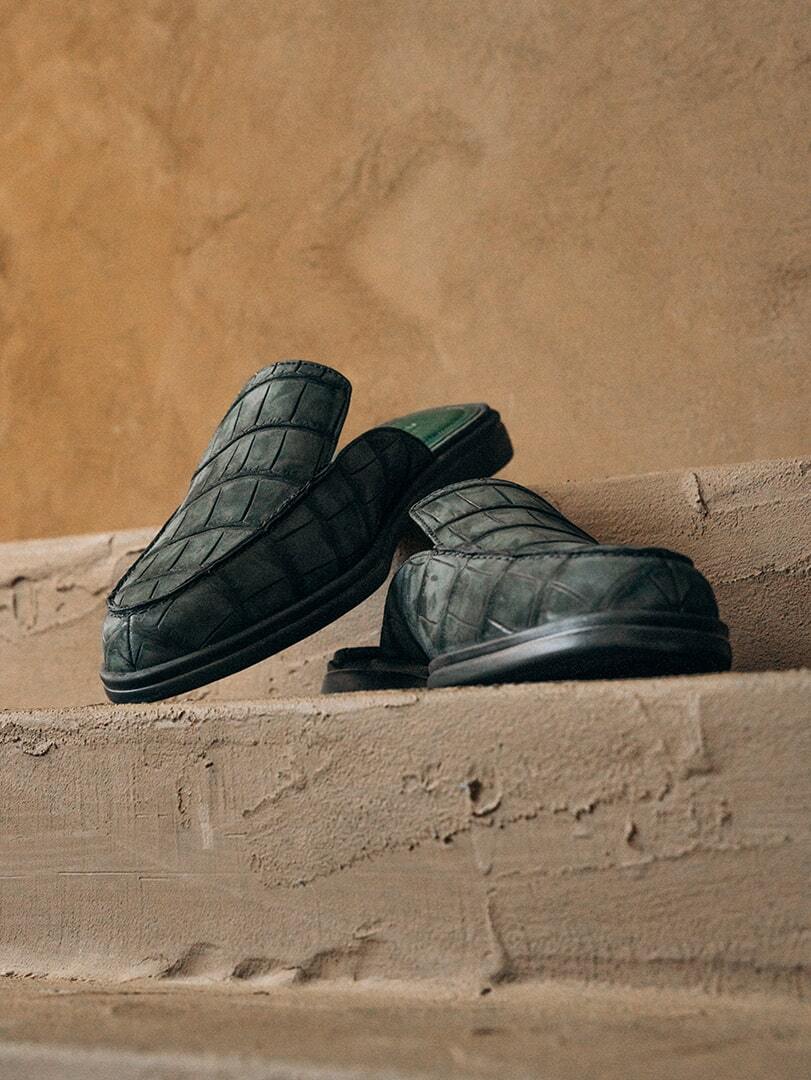
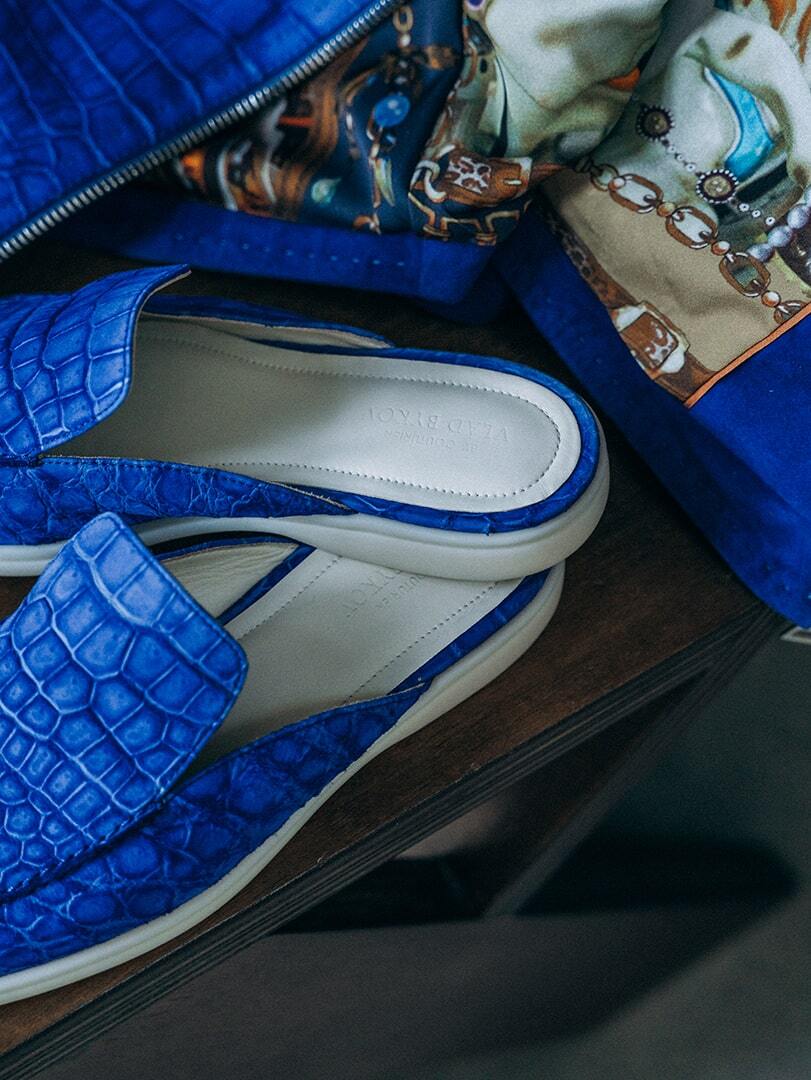
Structured leather shoes: loafers or mules with a firm front and a clean sole edge. Glazed crocodile loafers suit dupioni and shantung after dark; matte crocodile loafers suit silk-wool; suede or crocodile-and-suede mules suit silk-linen on a warm evening. Slides and soft slippers are what turn a silk suit into loungewear.
The House's black Loafers in Glazed Crocodile sit on a white outsole, which reads modern and belongs to evening tailoring. The Loafers in Matte Crocodile sit on a black one and are the most formal pair we make. Glazed crocodile carries the kind of polish evening dress traditionally asks of shoes: black tie once called for patent leather.
A mule works with silk because its front is built like a loafer's; it is the open heel that makes it relaxed. With loafers and mules, the trousers should have no break or only a slight one, so the shoe is seen. Which colour and finish go with which suit is set out in detail in my guide to crocodile shoes with a suit.

What belt and accessories go with a silk suit?
A real leather belt or side adjusters, never a drawstring, and one or two accessories at most. A crocodile belt in the same family of tone as the shoes, a watch and perhaps a pocket square are enough. Metals should agree: buckle, watch and buttons in one colour.
A belt gives a silk trouser the line a drawstring cannot, which is half of the difference between tailoring and loungewear at the waist. Our crocodile belts come with Italian buckles: the Sovereign belt in matte black crocodile with a gold buckle, a matte brown crocodile belt, and nubuck crocodile in burgundy, cappuccino, sand, turquoise and white.
If the suit is plain, a printed silk pocket square is where silk can be loud. If the suit has sheen, fold a square in matte linen or cotton instead, and let the suit speak.
Where can you wear a silk suit in Dubai this winter?
At almost every evening occasion from December to February. Dubai's coolest months average daily lows of about 15–17 °C and highs of 24–27 °C, which makes a silk-wool or shantung suit comfortable on a terrace after sunset, at a dinner, at a gallery opening or at a New Year's Eve reception.
Those figures are the World Meteorological Organization's 1991–2020 climate normals for Dubai International Airport, published by NOAA: January averages a daily minimum of 15.3 °C and a maximum of 24.4 °C, December 17.3 °C and 26.5 °C. In July the average maximum is 41.5 °C, which is why silk-wool is a winter cloth here and silk-linen belongs to the warmer months.
Indoors, the climate is the air-conditioning, and a suit has to pass between the two all evening. For the New Year receptions, a dupioni or shantung in a deep tone with glazed crocodile loafers; for a terrace dinner, a silk-linen in sand or stone with suede mules. In humid heat the rules shift again, as a Miami evening shows.
Can you wear a silk suit to a wedding or a black-tie event?
To a wedding, yes: shantung and dupioni are classics of bridal and formal wear, and a silk-wool suit is right for a guest or a groom at an evening ceremony. To black tie, only as a dinner suit: a black or midnight-blue jacket with silk-faced lapels, worn with a bow tie.
Black tie puts its silk in a precise place. A dinner jacket's lapels are covered in silk, most often ribbed grosgrain or smooth satin, occasionally silk barathea, and the bow tie matches them. A silk-wool dinner jacket made to that pattern belongs; a shiny silk suit with a knit polo is a cocktail look, beautiful in its place, but not black tie.
At a daytime wedding, choose the matte end of the cloth table: silk-linen or noil in a light tone, with suede mules or loafers. At an evening one, a deeper shantung or a silk-wool, with crocodile loafers.
How does the House make a silk suit to order?
Through bespoke or made-to-measure, starting with a consultation in Dubai or by video call. We choose the cloth together, in daylight and in evening light, decide its weight, the lining and the construction around how you will wear the suit, and make it to your measurements. Tailoring and clothing take approximately three to four weeks.
Silk suits are made to order and are not held as ready-to-wear on vladbykov.ae; each is cut for one person. Made-to-Measure adapts an existing pattern to your measurements; Bespoke drafts a pattern for you alone.
Personalisation, such as an embroidered name, can add roughly a week, and a special or newly developed cloth receives an individual estimate before payment. A silk suit is priced on request, because the figure depends on the cloth, the construction and the lining: your advisor quotes it once those are chosen, through Contact or on WhatsApp.
How do you look after a silk suit between evenings?
Hang it on a shaped hanger for a full day after each wear, use steam for creases, and send it to a dry cleaner only when it is marked. Keep it out of direct sun, let deodorant dry before you dress, and rest the trousers so the knees recover their shape.
Strong sun weakens silk and sweat turns it yellow, so what a silk suit needs most between wears is shade and air. A tailored jacket with a canvas front does not go into water at home, whatever its cloth. Hang the trousers by the hems or over a padded bar, so the knees fall out overnight.
Store the suit in a breathable cover with space around it, never pressed between heavier coats. The shirt or knit you wore beneath it is a different matter: the routine for caring for a silk shirt covers washing, drying and ironing.
Frequently Asked Questions
Is a silk suit formal?
It depends on the cloth. Silk-wool, shantung and dupioni in deep colours are formal enough for evening receptions, weddings and dinners. Silk-linen and noil are relaxed and suit daytime and warm evenings. A silk lounge suit is never black tie; a dinner jacket with silk facings is.
Can you wear a silk suit in winter?
Yes, in a silk-wool blend. Wool gives the suit warmth and body, silk a soft glow, which makes it a natural cloth for winter evenings in Dubai, where January nights average about 15 °C, and for air-conditioned interiors anywhere.
Does a silk suit wrinkle?
Smooth pure silk and silk-linen crease the most; silk-wool sheds wrinkles best, because wool recovers. Hang the suit for a day after wearing it, steam out what remains, and choose a slubbed or textured weave if you travel with it.
Is a silk suit hot to wear?
Less than many expect. Silk has a good moisture regain of about 11%, and a light silk-linen breathes well on a warm evening. A dense, fully lined silk-wool is warmer and better suited to cool nights and air-conditioned rooms.
What is the difference between shantung and dupioni?
Both are plain-weave silks with slubs. Shantung is slightly thinner and more regular. Dupioni uses an irregular yarn from cocoons that grew tangled together, so it is thicker, heavier, more slubbed and often iridescent. Brides and formal occasions favour both.
Can you wear a silk suit to the office?
A silk-wool suit in navy or charcoal, worn with a shirt, is quiet enough for most offices, especially on a day that ends at a dinner. Keep pure silk, dupioni and anything with visible shine for after hours.
Can you wear a silk suit with a T-shirt?
With a matte silk-linen or noil suit by day, yes: a plain, close-fitting T-shirt looks relaxed and deliberate. Under an evening suit in silk-wool, shantung or dupioni, choose a knit polo or a shirt, which hold their line under a structured jacket.
Is a silk-wool suit better than a pure wool one?
Not better, different. Pure wool is the more versatile, everyday cloth. A silk-wool blend adds a soft glow and a smoother hand, which suits evenings and occasions; worn every day, the glow becomes the first thing people notice.
How much does a bespoke silk suit cost?
Each silk suit is priced on request, because the cloth, the construction and the lining set the figure. Your advisor gives an individual quote once those are chosen, and you have it before any cloth is cut.
How long does it take to make a silk suit?
At VLAD BYKOV Couturier House, tailoring and clothing take approximately three to four weeks, depending on the piece. Personalisation can add roughly a week, and a special or newly developed cloth receives an individual estimate before payment.
Written at VLAD BYKOV Couturier House, Dubai. About the House · Ready-to-Wear · Commission a bespoke piece · Contact · Privacy Policy
The Metropolitan Museum of Art, NOAA, UFC and other names mentioned in this article belong to their respective owners and are referenced for context only. Mention does not imply partnership, licence or endorsement.