12.11.2026
Loafers Through History: From Norwegian Fishermen to Yacht Clubs
Loafers Through History: From Norwegian Fishermen to Yacht Clubs
By Vlad Bykov, Founder and Couturier, VLAD BYKOV Couturier House, Dubai · Published 12 November 2026
By most accounts, loafers began as working shoes in Norway. Around 1908 Nils Tveranger of Aurland built his first shoe on the Iroquois moccasin and the slip-on of fishermen and farmers; in 1926 London's Wildsmith made a laceless house shoe. G.H. Bass took it to America as the Weejun in 1936; campuses, Gucci and yacht clubs made it a classic.
Who invented loafers?
No single person, and the title is still contested. Most sources say the Norwegian shoemaker Nils Gregoriusson Tveranger made his first Aurland shoe around 1908, while the London maker Raymond Lewis Wildsmith made a laceless country-house shoe in 1926. The American penny loafer descends from the Norwegian line, through G.H. Bass and its Weejun.
The two shoes are built in different ways, which is why both claims survive. Tveranger's shoe is a moccasin: a U-shaped apron sewn into the top of the foot, the seam that every penny loafer still carries. Wildsmith's shoe belongs to English shoemaking: a laceless shoe made on a last, with a heel, closer to a dress shoe than to a slipper.
Each side has its documents. The Wikipedia history of the slip-on calls the Wildsmith shoe the first loafer. Aurland Skofabrikk, the last shoe factory in Aurland, describes its shoe as the original penny loafer, and G.H. Bass says the same of the Weejun. Who came first depends on what you count as a loafer: the moccasin construction or the laceless shoe.
What was the Aurland shoe, and how did fishermen shape it?
The Aurland shoe is a moccasin-style leather shoe from Aurland, a village on Norway's Sognefjord. Tveranger, who had trained as a shoemaker in America, combined the moccasins of the Haudenosaunee, the Iroquois, with the tese, a local slip-on worn by fishermen and farmers. His first version still had laces and eyelets.
According to the history of Aurland Skofabrikk, the early shoe was known as the Nasjonalsko, the national shoe, and the laceless Aurland moccasin followed in the 1930s. In 1910 Tveranger received a diploma at the Bergen exhibition for his Aurland shoe. Exported to the United States, the shoes were sold as Norwegian moccasins.
Sources disagree even on his biography. Wikipedia has him leaving for North America at thirteen and returning at twenty; the factory says he went to America in his early twenties. The factory's 2024 article traces the style to 1926, while the English and Norwegian Wikipedia both date the first design to around 1908.
After the Second World War the shoe was exported to Britain, Canada and the United States. At its peak Aurland had 19 shoe factories; since 1989 Aurland Skofabrikk has been the only maker of the Aurland shoe. It still sells the shoe with a Norwegian 10-øre coin in the pocket across the vamp, although the coin is no longer in use.
What did Wildsmith make in London in 1926?
A laceless shoe for the country house. By the company's own account, Raymond Lewis Wildsmith of the London shoemaker Wildsmith Shoes made it in 1926 for a royal client, as a comfortable shoe to slip on and off indoors and out without touching a lace. Wildsmith still makes it as the Wildsmith Loafer.
Even its name has two versions: Wikipedia records the model as the 582, while Wildsmith now calls it Model 98. What matters for the history is the construction. Where the Aurland shoe is a moccasin, the Wildsmith shoe is a structured shoe without laces.
Those two lines explain the range of loafers we know today. At one end sits the soft, unstructured pair you can fold in the hand; at the other, the firm loafer with a defined heel that is worn with tailoring.
How did the loafer reach America?
Through Maine. G.H. Bass, the shoemaker of Wilton, Maine, saw European interest in the Norwegian moccasin and adapted it for America, naming it the Weejun, a shortening of Norwegians. Bass dates the Weejun to 1936; Alan Flusser's book Dressing the Man, as cited by Wikipedia, gives 1934. Both dates appear in serious histories.
In Bass's own telling, George Henry Bass took a slip-on worn by Norwegian farmers and fishermen and refined it. The Weejun added the detail that defines the American loafer: a strip of leather across the saddle of the vamp, with a diamond-shaped cutout.
At first the Weejun was a summer shoe worn at home. The menswear historian G. Bruce Boyer, writing in Cigar Aficionado in 1998, describes the American loafer as an adaptation of a Norwegian fisherman's shoe that became popular between the wars.
Why are they called penny loafers?
Because students put coins in them. The usual story is that American students slipped a coin into the cutout of the strap on their Weejuns, and the shoe took its name from the habit. Boyer places the fad in the late 1940s, Wikipedia in the 1950s, and G.H. Bass itself calls the story a legend.
Why a coin is disputed too. The Bass version has Ivy League students keeping a coin for the payphone; Wikipedia describes the coin as a fashion statement; Boyer writes of a copper coin in each of the two instep slots. No source names the first student, and none needs to: the name stuck.
Norway tells the same story with its own money. Aurland Skofabrikk says its shoe originally carried a Norwegian 10-øre coin in the pocket, for an important phone call or the bus home after a long evening, and it still ships the shoe with one.
How did loafers become part of the Ivy League look?
On campus, after the Second World War. By the late 1940s, Boyer writes, the penny loafer was standard on American college campuses and part of the postwar collegiate uniform of "button-down shirts, khaki trousers, tweed sports jackets and Shetland crewneck sweaters". Within a short time it had overtaken the saddle oxford.
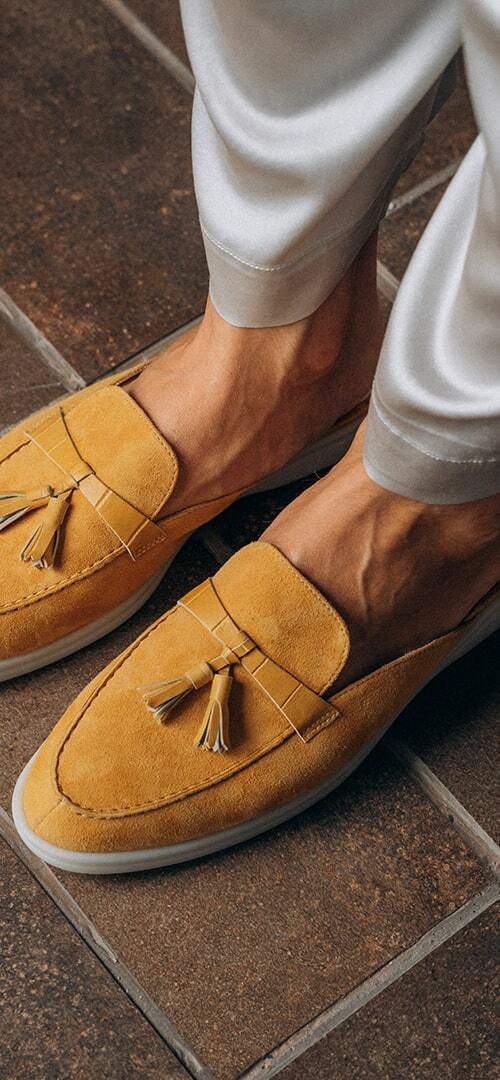
The shoe then followed its wearers from prep school to the Ivy League and on to Wall Street, where they wanted something a little dressier. That demand produced the tassel loafer: Alden began making it in 1950, and in 1957 Brooks Brothers, then the best-known outfitter of the Ivy League look, asked Alden for a version of its own.
East Coast prep culture came to accept the tassel loafer as the equal of the brogue, which is how it reached suits and gained its association with business and law. A shoe that started on a fjord was now worn to the office.
Who made the first tassel loafer?
Alden, by the company's account. In 1948 a film actor brought home European oxfords with small tassels on the laces and asked New York shoemakers to copy them; the request reached Alden, whose president designed a slip-on that kept the lacing and tassels as decoration. Alden put it into production in 1950.
By 1952 the two stores that launched it, Lefcourt in New York and Morris in Beverly Hills, carried the shoe in some 20 colours and leathers, Boyer reports. The tassel is a laced oxford remembered on a shoe without laces: a decorative detail that moved the loafer closer to formal dress.
The tassel lives on beyond the loafer. Our suede mules with nubuck crocodile tassels carry the same idea on a backless shoe, with each tassel finished by hand.
When did Gucci create the horsebit loafer?
In 1953, according to the Museum at FIT, which describes Gucci's signature loafer as modelled on Native American moccasins and finished with gold horsebit hardware. Wikipedia dates the metal bit across the vamp to 1966. Either way, the bit replaced the strap and the tassel, and the loafer became a status symbol of jet-set leisure.
The museum holds a white leather pair from about 1955. The Costume Institute of the Metropolitan Museum of Art holds Gucci loafers in leather and metal from about 1972, given in 1984. Wikipedia describes the horsebit loafer as almost a Wall Street uniform in the 1970s and in widespread use by the 1980s.
With the bit, the loafer's decoration moved from leather to metal, and the shoe that began as a fisherman's slipper became an object that museums collect.
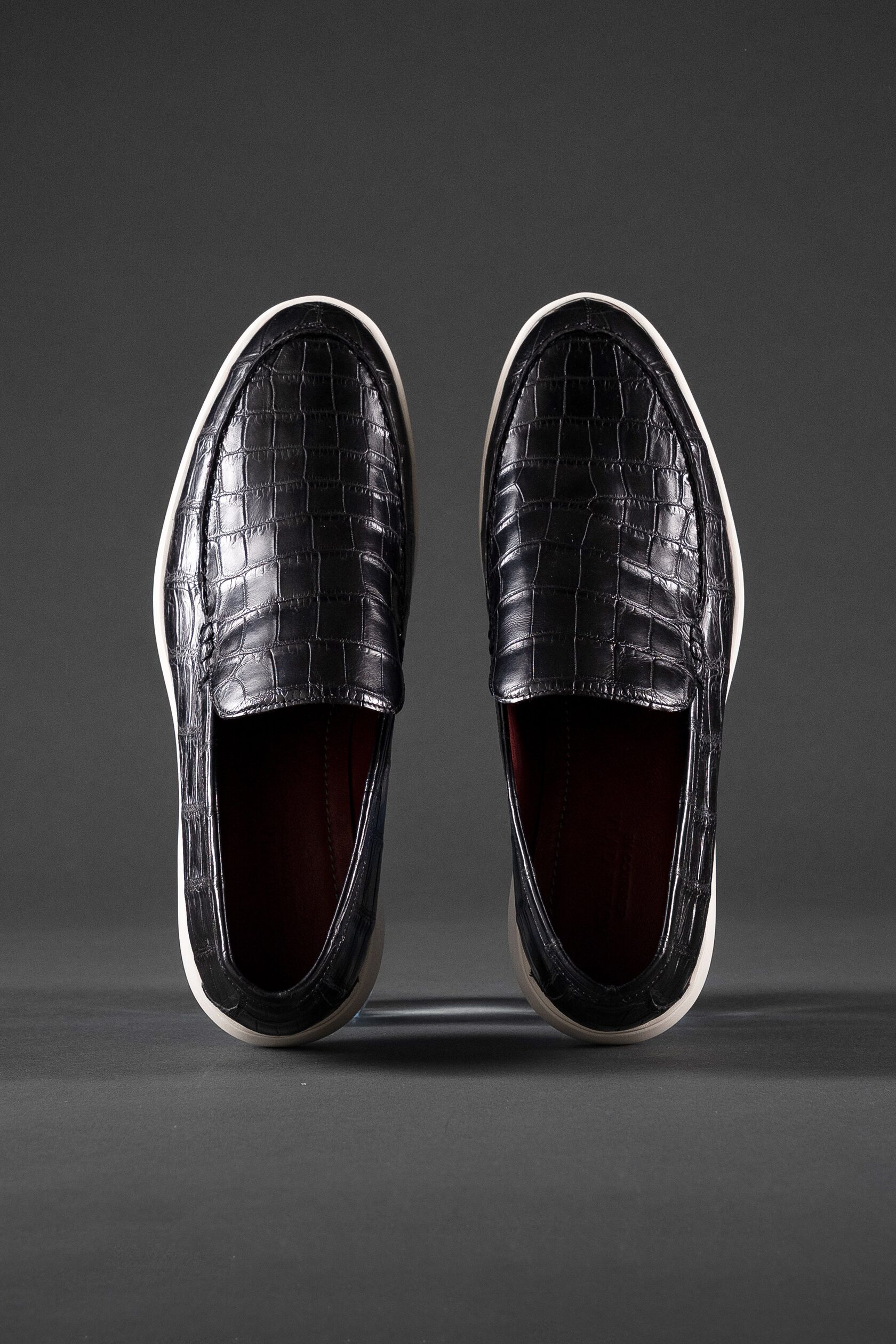
What is a Belgian loafer, and how is it different from a penny loafer?
A Belgian loafer is a soft, hand-stitched slip-on with a small bow at the top of the vamp. It takes its name from Belgian Shoes, which Henri Bendel founded in New York in 1955 to sell loafers made in Belgium. A penny loafer is firmer, with a leather strap and a cutout across the vamp.
Bendel, the nephew of the founder of the Henri Bendel store, opened Belgian Shoes at 60 East 56th Street after the family sold the department store in 1955; the shoes are made in Izegem, a historic centre of Belgian shoemaking. Belgium made him a knight of the Order of Leopold in 1964 for reviving its shoe industry.
The Museum at FIT holds a pair from about 1963: Midinette slipper loafers in silk brocade with a gold leather bow and piping, the two details that still identify the style.
That is the difference between a Belgian loafer and a penny loafer as history tells it. Both are loafers, both slip on, and both can be made to order; which suits you depends on the setting, and I set out how to choose in the guide on where to order custom-made loafers.
How did loafers move from campuses to yacht clubs?
As the shoe of leisure. Bass adapted the Norwegian moccasin for America's leisure classes; the Museum at FIT calls Gucci's horsebit loafer a status symbol of jet-set leisure and luxury; Belgian Shoes became a status symbol of the Upper East Side and the Hamptons. A shoe that slips off at the door suited clubs, docks and summer houses.
On deck, the moccasin went one step further. The boat shoe, invented in 1935, usually keeps a moccasin toe and adds a siped rubber sole that grips a wet deck. A loafer with a light rubber sole works on a calm deck too, as I explain in the guide on what to wear on a yacht; a leather sole stays on the dock.
So the quality that made the shoe practical for a fisherman, ease, made it the shoe of people who could choose what to wear. Ease became a sign of status.
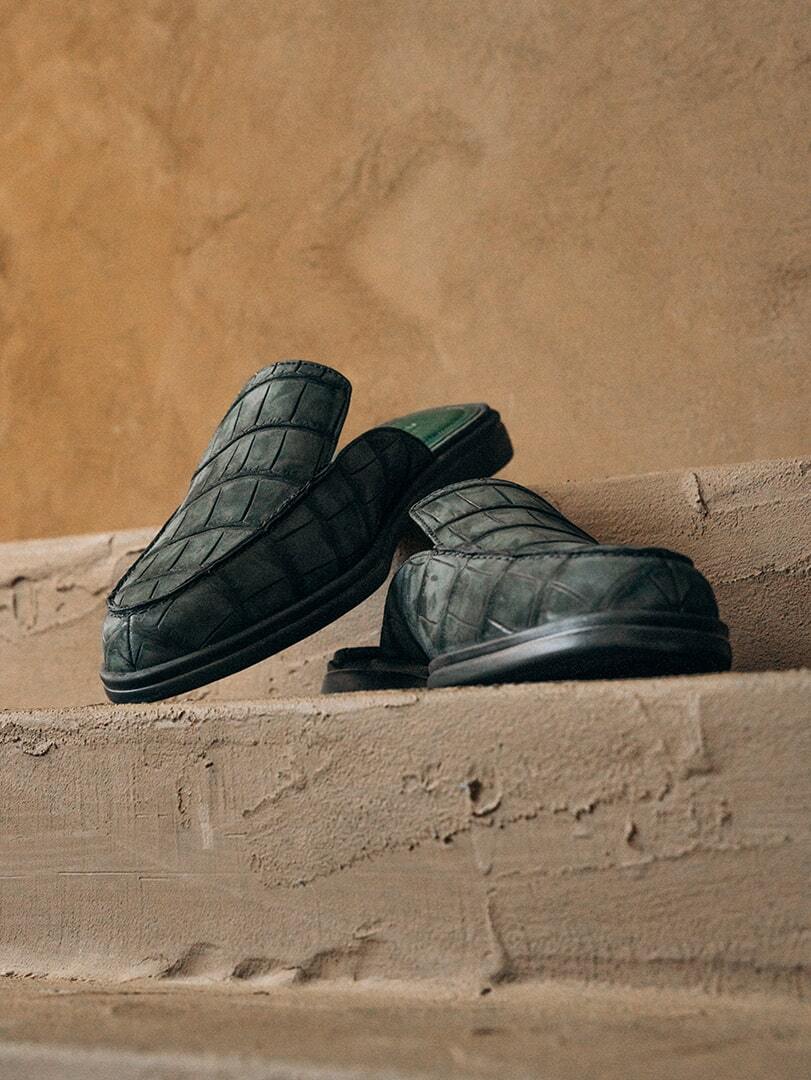
How has the loafer changed from 1908 to today?
In a little over a century the loafer kept its core, a slip-on built around a moccasin apron or a laceless last, and changed its details: laces dropped in Norway, a strap with a cutout in Maine, tassels in 1948, a metal bit at Gucci, a bow from Belgium, and finally the open back of the mule.
Where authorities disagree, the table gives both dates: the first Aurland shoe, the Weejun and the Gucci bit are each dated differently by different sources.
Is a mule just a loafer without a back?
Not quite, but they are close relatives. A loafer encloses the whole foot; a mule keeps the constructed front of a closed shoe and leaves the heel open. Gucci itself turned its horsebit loafer into backless mule slippers by spring 2016: the Museum at FIT holds a pair with the horsebit at the instep and a rounded apron toe.
I described the difference when I wrote about a pair of personal loafers made for a guest who travels constantly: "Mules are backless. That single construction choice changes everything about how they wear: faster on and off, a more relaxed silhouette, and a slightly more expressive statement."
The mule is where this history continues in our work. The open heel lets air move around the foot in heat, and the vamp still holds the foot like a proper shoe; I wrote at length about why influential people choose mules.
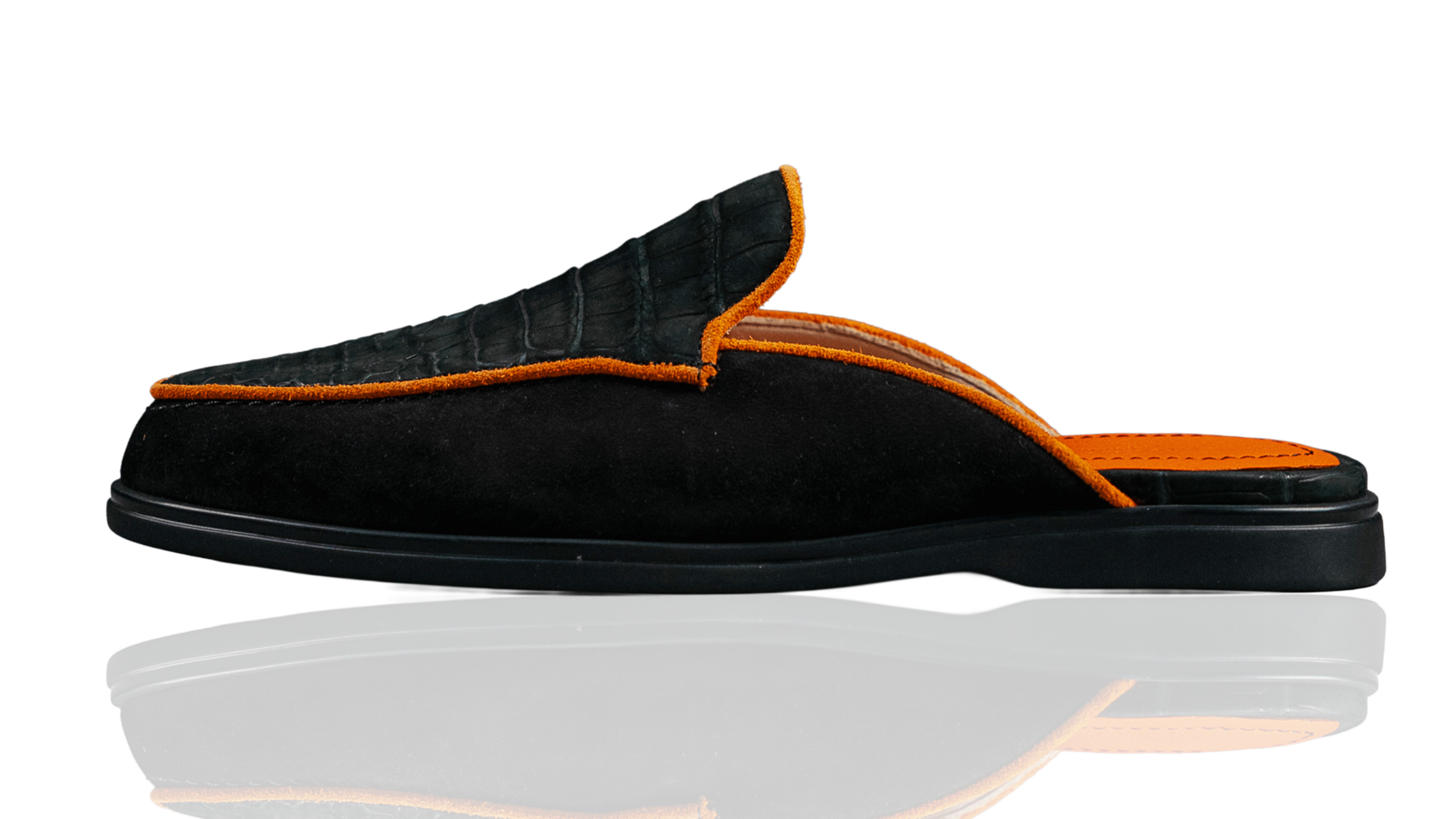
How does VLAD BYKOV make loafers today?
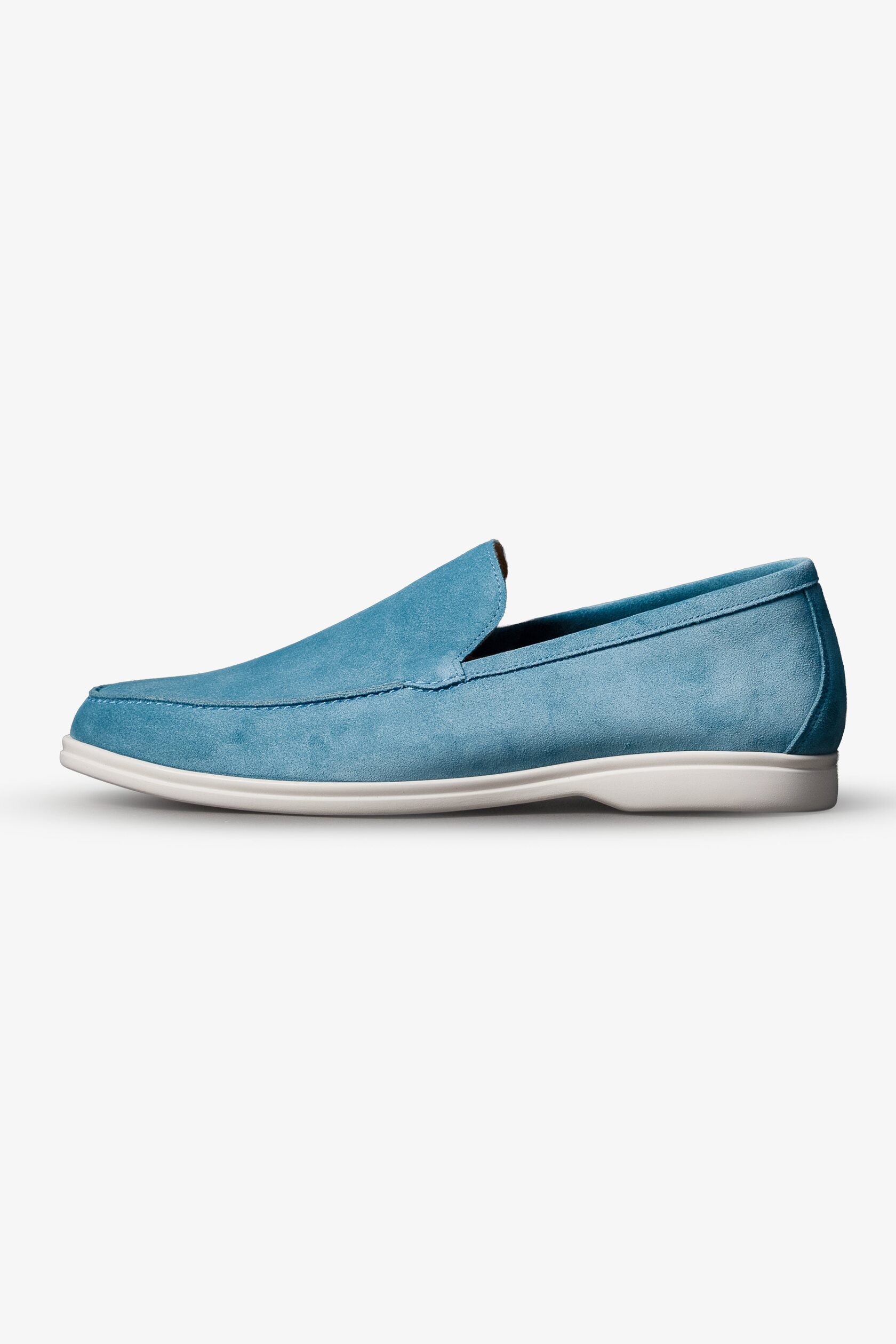
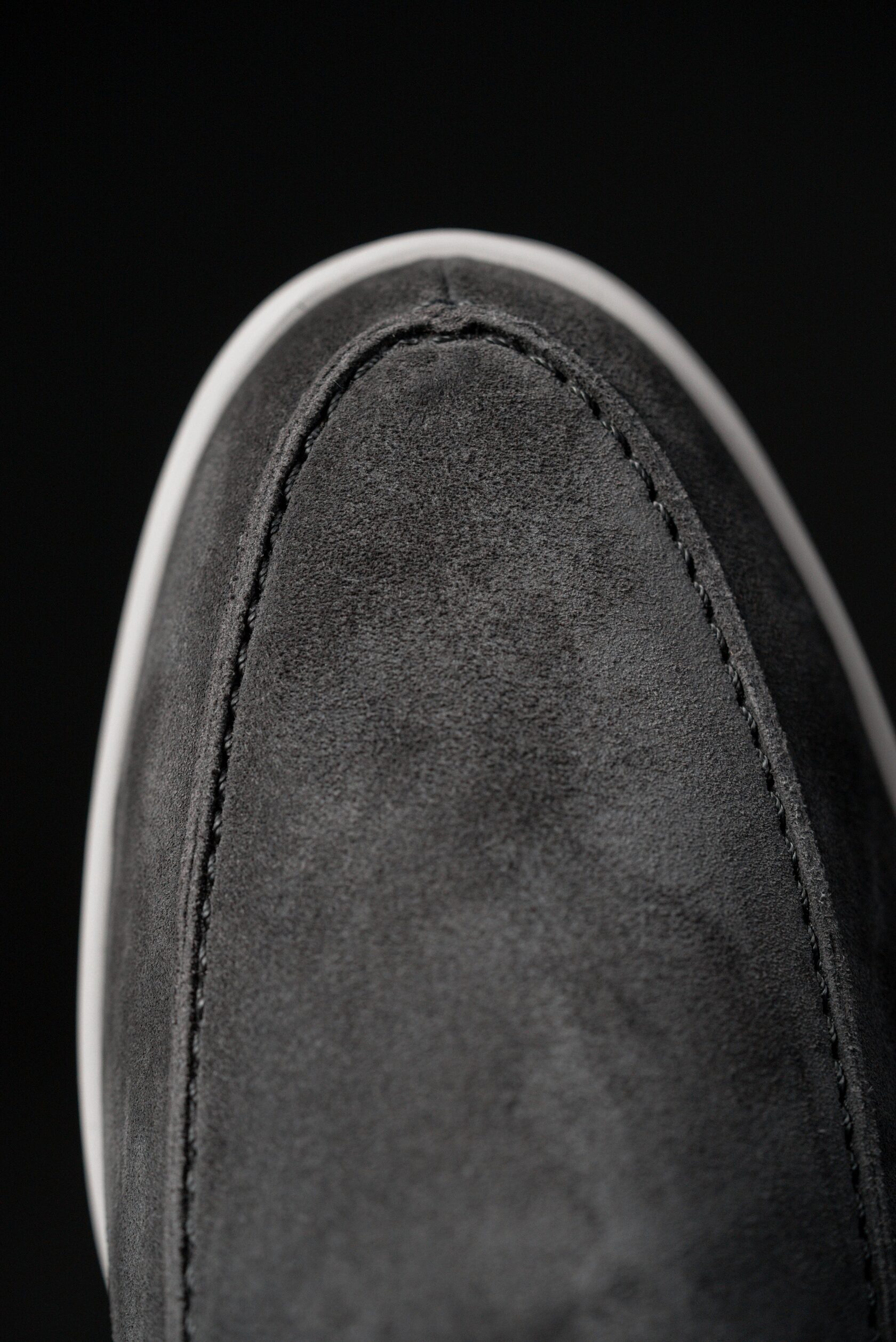
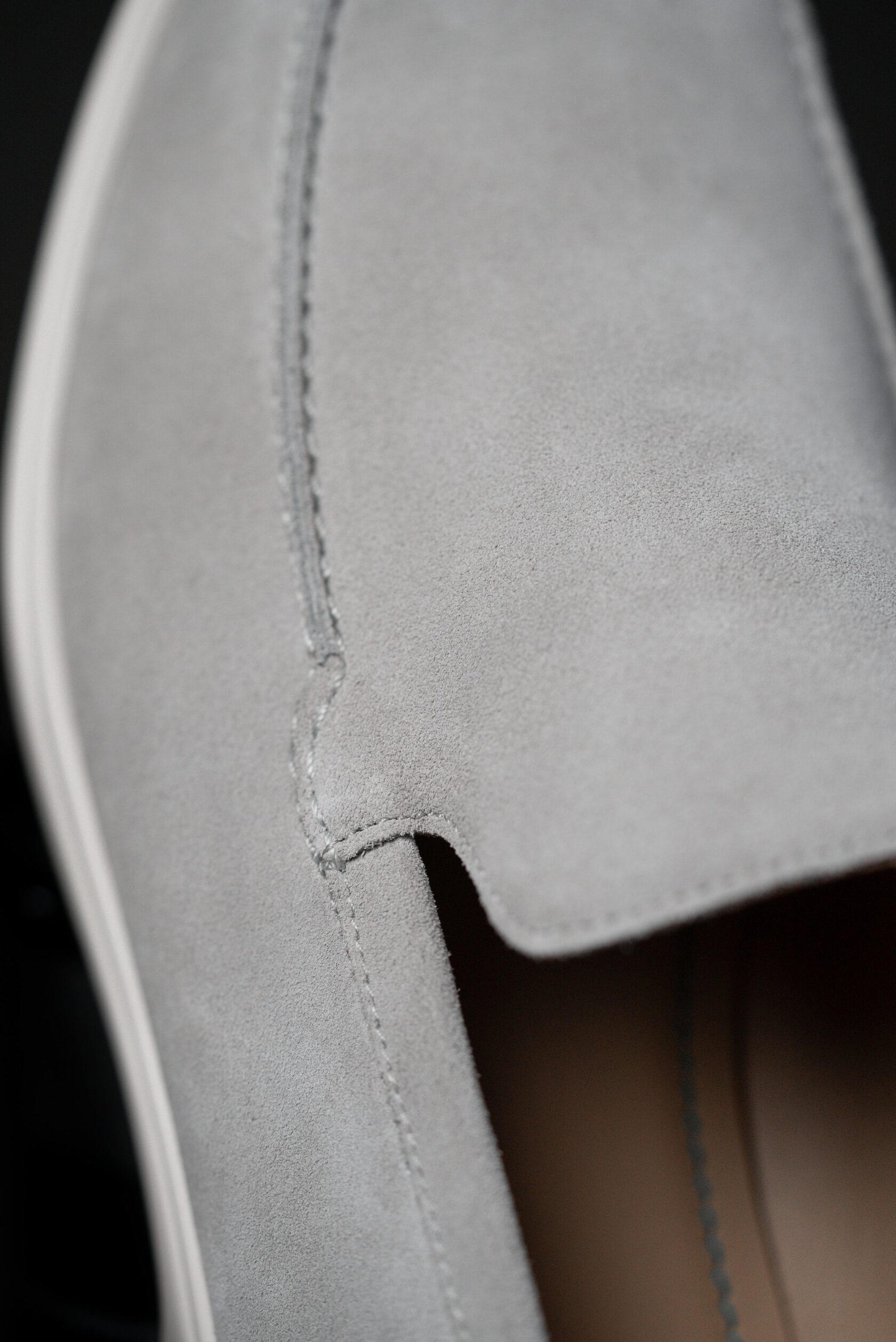
By hand, in materials the loafer's history rarely used: Italian suede, crocodile in a matte or glazed finish, or suede combined with crocodile, over a natural calfskin lining, a natural leather insole and a light rubber sole. Our ready-to-wear loafers keep the moccasin's apron seam around the toe.
Standard sizes run from EU 40 to 45, with EU 47, 48 and 49 on request, and any model can be made to a guest's measurements. Production takes from two and a half to five weeks, depending on whether the pair is made to order or bespoke. How a seam sewn by hand differs from one sewn by machine is the subject of hand-stitched vs machine-stitched loafers.
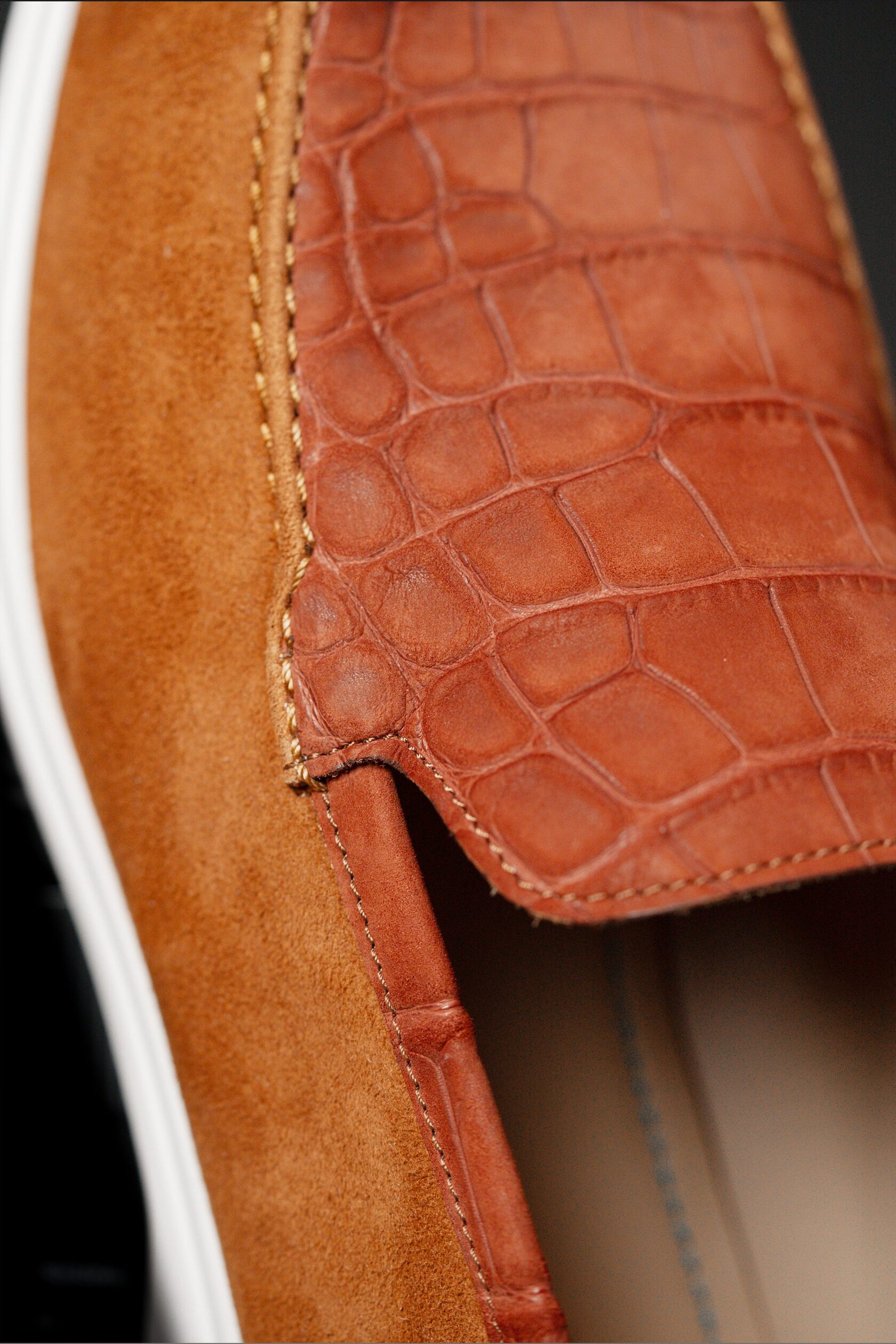
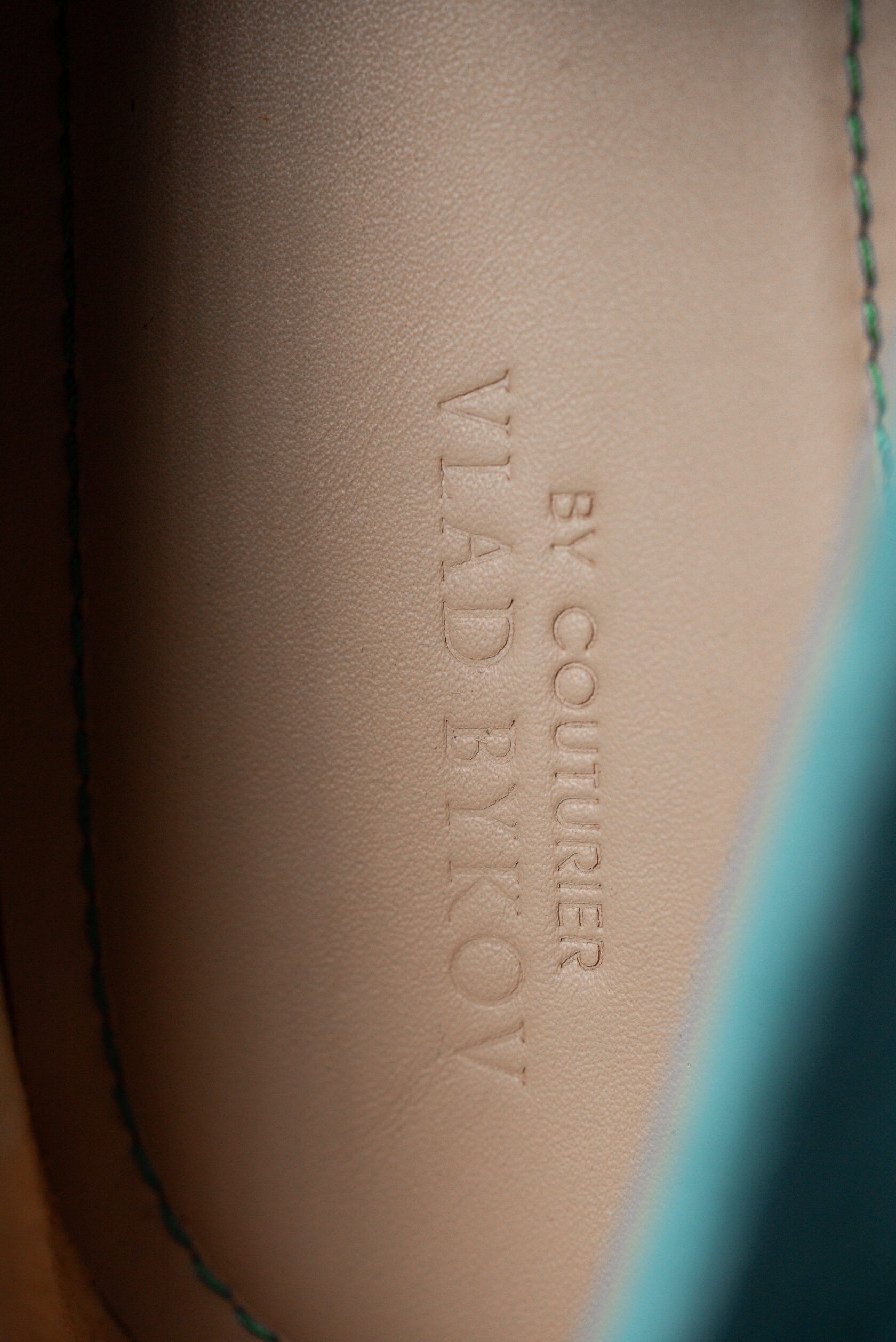
The last detail is inside, as I wrote in that story of personal loafers: "Inside every individual pair we leave an inscription — our signature, a sign that these shoes were made for one particular person." Every pair is priced on request: ask through Contact or on WhatsApp.
What does the loafer's history say about choosing a pair today?
That every detail on a loafer once had a job. The apron seam comes from the moccasin, the strap from Maine, the tassel from a laced oxford, the bit from the stable, the bow from Belgium, and the open back belongs to its newest relative, the mule. Choose by use: the tassel or the horsebit when the loafer goes with a suit, the strap for weekends, the soft Belgian shape for a slipper's ease, the mule when you want an open heel.
None of the people who shaped this shoe were working for history. A Norwegian shoemaker answered a local need, a Maine company adapted it for summer, students added a coin. I wrote about this pattern in an essay on people who build history: "History arrived as a by-product of years of honest work, not as a goal set out in advance."
Frequently Asked Questions
What is the difference between a loafer and a moccasin?
In a traditional moccasin, the sole and sides are one piece of soft leather stitched together at the top, sometimes with an extra panel over the foot. A loafer keeps the moccasin's slip-on ease and often its apron seam, but adds a separate, firmer sole and a heel.
Are Bass Weejuns the original penny loafer?
G.H. Bass calls the Weejun of 1936 the original penny loafer, and Wikipedia credits it with the strap and its diamond cutout. The shoe it adapted came from Norway, though, and Aurland Skofabrikk describes the Aurland shoe as the original penny loafer too.
What coin goes in a penny loafer?
In America, a one-cent coin, which gave the shoe its name; Boyer writes of a copper coin in each of the two slots. In Norway, the Aurland shoe traditionally carried a 10-øre coin, and Aurland Skofabrikk still ships its shoe with one.
What does Weejun mean?
Weejun is the name G.H. Bass gave its loafer, a shortening of Norwegians, in recognition of the shoe's Norwegian origin. It is a Bass trademark, yet in America people still use the word for penny loafers in general.
Why do loafers have tassels?
Because of a pair of laced oxfords. In 1948 a film actor asked for copies of European oxfords with tassels on their laces; Alden turned the idea into a slip-on, keeping a leather lace and tassels as decoration. The tassel loafer went into production in 1950.
Is the Gucci loafer in a museum?
Yes. The Museum at FIT in New York holds a white leather Gucci horsebit loafer from about 1955, and the Costume Institute of the Metropolitan Museum of Art holds Gucci loafers from about 1972, given to the museum in 1984.
Where are Aurland shoes made today?
In Aurland, on the Sognefjord in western Norway. Aurland Skofabrikk has been the only maker of the Aurland shoe since 1989; its factory on the quay can be visited, and the shoe is still sold with a 10-øre coin in the strap.
Can I order penny or Belgian loafers from VLAD BYKOV?
Yes. Both constructions can be made to order, and the choice depends on where you will wear them. Your advisor helps you choose the leather, Italian suede or crocodile, the colour and the fit, in standard sizing or to your measurements.
How much do VLAD BYKOV loafers cost?
Every pair is priced on request. Send the model, the leather, the colour and your size to an advisor through the Contact page or on WhatsApp, and the price comes back individually, confirmed before payment. Consultations take place in person in Dubai or by video call.
How long does it take to make a pair of loafers at VLAD BYKOV?
Between two and a half and five weeks. A made-to-order pair in standard sizing takes about two and a half to three weeks, a bespoke pair to your measurements three and a half to five; a special leather receives an individual estimate before payment.
Written at VLAD BYKOV Couturier House, Dubai. About the House · Ready-to-Wear · Commission a bespoke piece · Contact · Privacy Policy
Aurland Skofabrikk, Wildsmith, G.H. Bass, Weejuns, Alden, Brooks Brothers, Gucci, Belgian Shoes, WhatsApp and other names mentioned in this article belong to their respective owners and are referenced for context only. Mention does not imply partnership, licence or endorsement.