04.11.2026
How to Travel with Luxury Shoes: A Couturier's Packing Guide
How to Travel with Luxury Shoes: A Couturier's Packing Guide
By Vlad Bykov, Founder and Couturier, VLAD BYKOV Couturier House, Dubai · Published 4 November 2026
To travel with luxury shoes without damaging them, put shoe trees in every pair, give each shoe its own cotton bag, lay the shoes along the walls of the suitcase with the soles facing out, and carry the most valuable pair on board. Never pack leather damp, keep suede away from other soles, and let every pair air on arrival.
How do you travel with luxury shoes without damaging them?
Treat the suitcase as the riskiest part of the journey. Fine shoes are rarely ruined by a week of wear; they are ruined by pressure, friction and trapped moisture in transit. Support the shape from inside, separate every surface, put each pair where weight cannot crush it, and keep the most valuable pair with you.
I put it in one line in the story of a pair of personal loafers: "most damage to fine footwear happens not in wear but in the suitcase." The festive season tests that line every year: Dubai, European capitals, Moscow and Miami within a few weeks, with heat, rain, frost and humidity in one suitcase.
Order matters as much as method. Shoes go in first, at the wheel end of the case; clothes fill the middle; silk goes in last, on top. The sections below take each line of the table in turn, then the bags that travel with each pair.
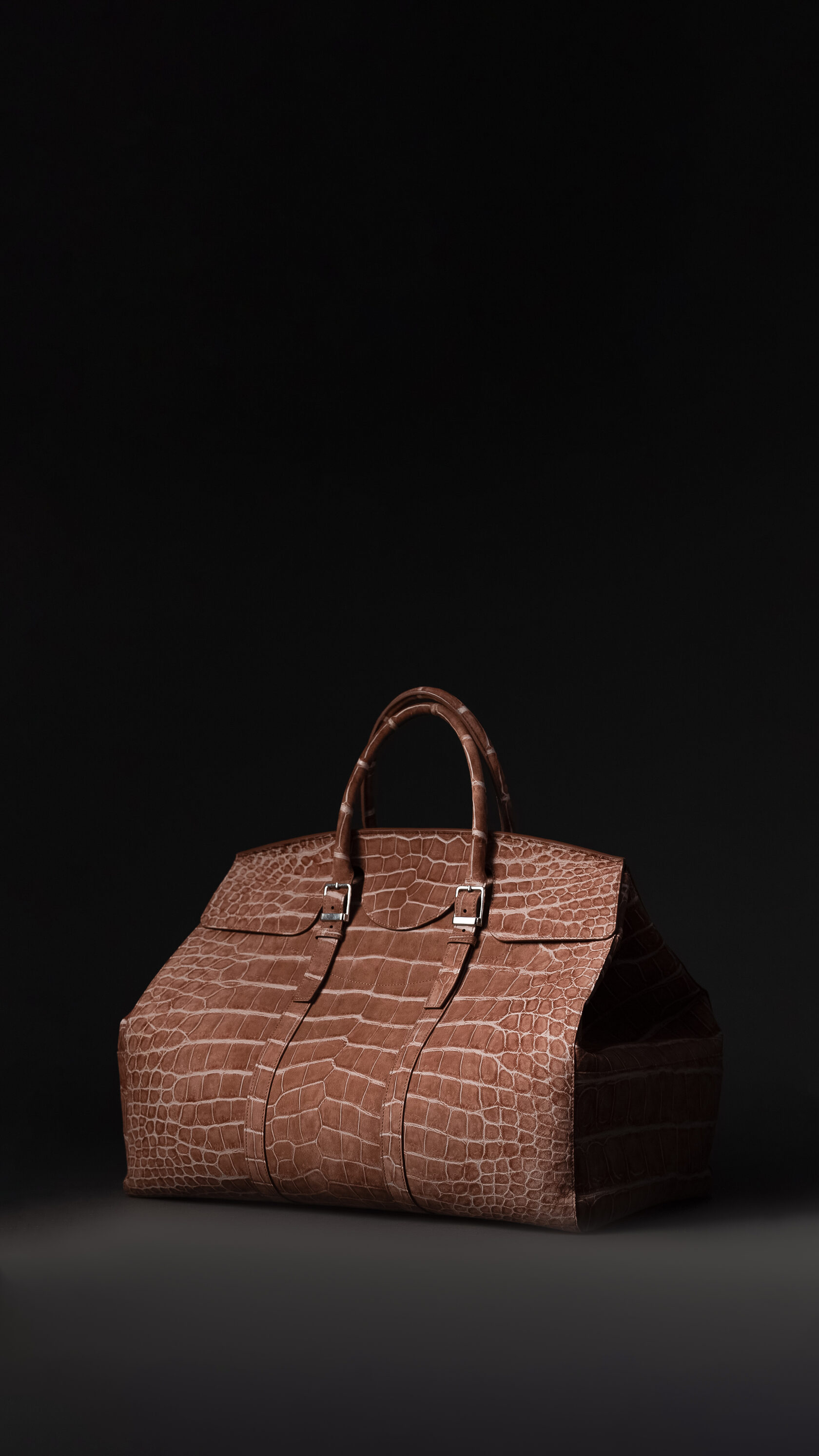
How do you pack shoes in a suitcase?
Clean and dry each pair, insert shoe trees and slip every shoe into its own cotton bag. Then lay the shoes along the walls of the case, heels towards the wheels and soles facing the shell, and pack soft clothing around them, so nothing shifts in transit and nothing heavy rests on a vamp.
Each shoe gets its own bag. Two shoes in a single bag rub against each other for the whole flight, and a sole, a buckle or the hard edge of a crocodile scale marks the other upper. Cotton or flannel is right because it breathes: the Canadian Conservation Institute notes that wrapping leather in hygroscopic materials such as acid-free tissue or cotton fabric reduces the effects of changing humidity, and a flight changes it many times.
The walls and the wheel end are the safest places. When the case stands, weight settles towards the wheels; when cases are stacked, the centre takes the pressure from above. Shoes placed along the frame with their soles towards the shell keep the dirtiest surface away from clothes and from each other's uppers. Before packing, wipe the soles and dust the uppers with a dry cloth; on crocodile, follow the direction of the scales.
The same method answers how to pack dress shoes of any kind. Laced shoes travel with the laces loosened and tucked inside; loafers and mules travel as they are, with the tree or tissue holding the vamp. Close the case without force: a lid pressed shut presses on everything under it.

Should expensive shoes go in carry-on or checked luggage?
In carry-on, if the pair matters to you. The care notes the House sends with every exotic commission say it plainly: carry it, do not check it. Hold luggage meets pressure, temperature swings and rough handling, and an airline's liability for a lost or damaged suitcase on an international flight is capped at roughly US$2,000.
That cap comes from the Montreal Convention. Its Article 22 limits a carrier's liability for baggage in the case of "destruction, loss, damage or delay" for each passenger), and since 28 December 2024 that limit has been 1,519 Special Drawing Rights, which ICAO puts at about US$2,000. It covers the whole suitcase together with everything inside it.
So the cabin bag holds what you would not replace: the crocodile pair, anything in nubuck, a crocodile bag and the silk shirt for the first evening, in case the suitcase arrives a day later. Wear the heaviest closed pair on board. Loafers handle the airport, the flight and the walk to the car.
In the cabin, shoes keep their trees and their bags and lie flat, soles down, under softer things.
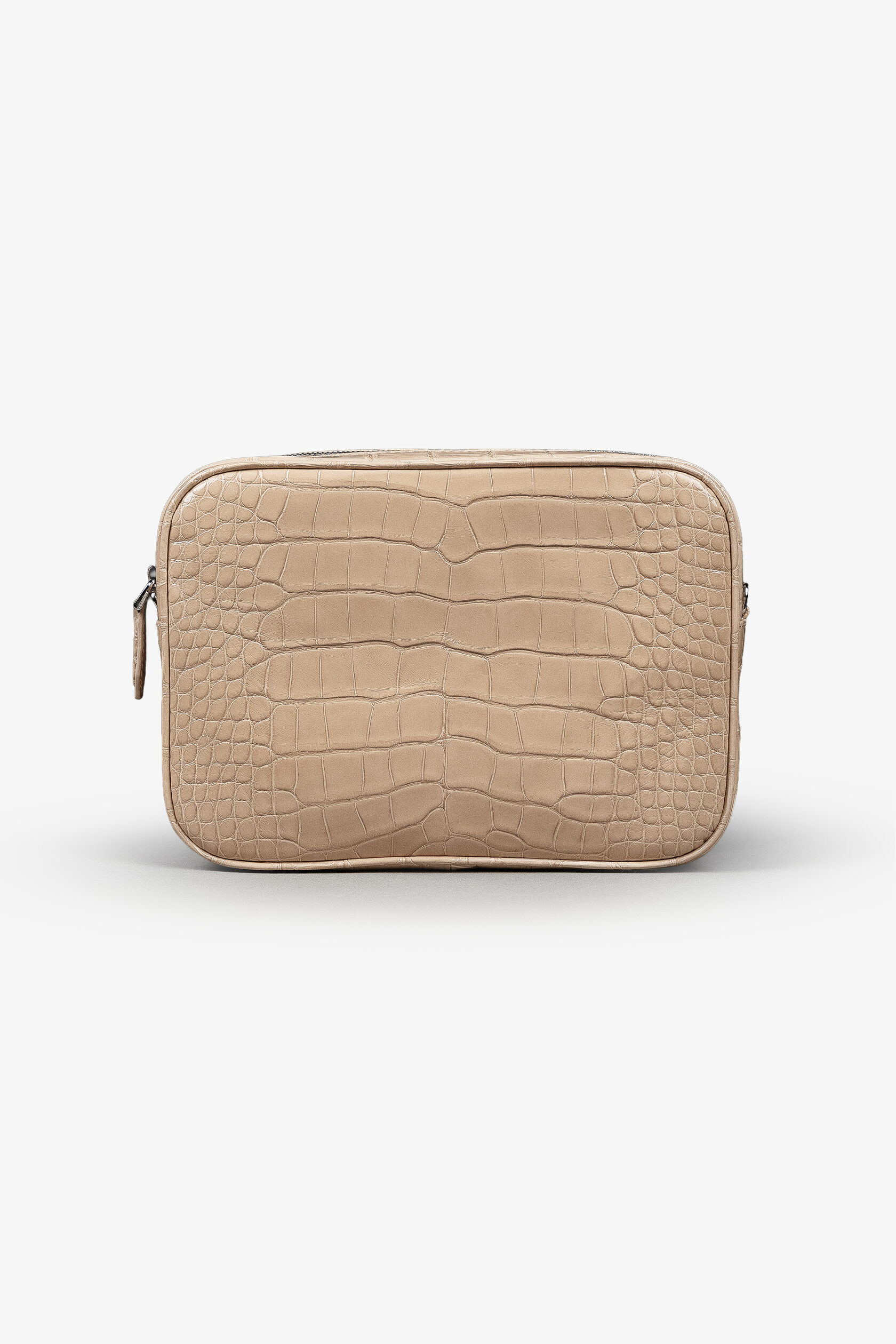
How do you pack crocodile shoes for travel?
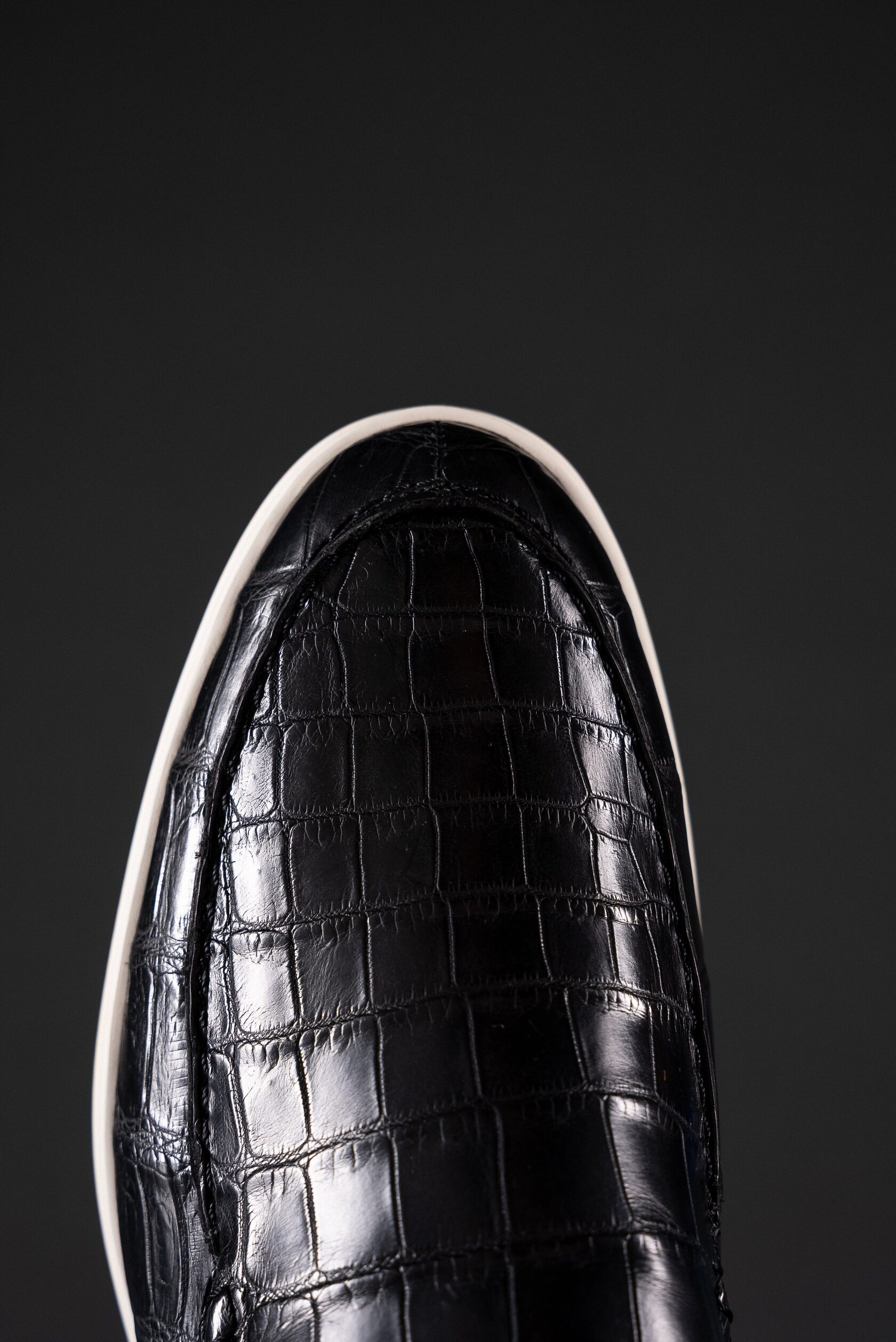
With support and space. Crocodile keeps its shape as long as the vamp is held from inside, so shoe trees matter here. Give each shoe its own soft bag, so scale edges never meet buckles, zips or another sole, and keep nubuck crocodile in the cabin, away from water.
The finish decides how much care the journey needs. Glazed crocodile handles moisture best and matte is close behind; nubuck, buffed to a velvety nap, should not meet water at all, and a soft brush belongs in its bag. That is the order set out in our crocodile leather care guide, which covers the full routine of cleaning and conditioning.
Keep hard objects away from crocodile. Chargers, bottles and the metal of a buckle leave marks on a glazed surface that a cloth will not lift, so they travel in a different part of the case.
On arrival, take the pair out, leave the trees in and dust it with a dry cloth along the scales. If the shoes travelled in the hold, check the toes and heels for pressure marks while they are still easy to treat.
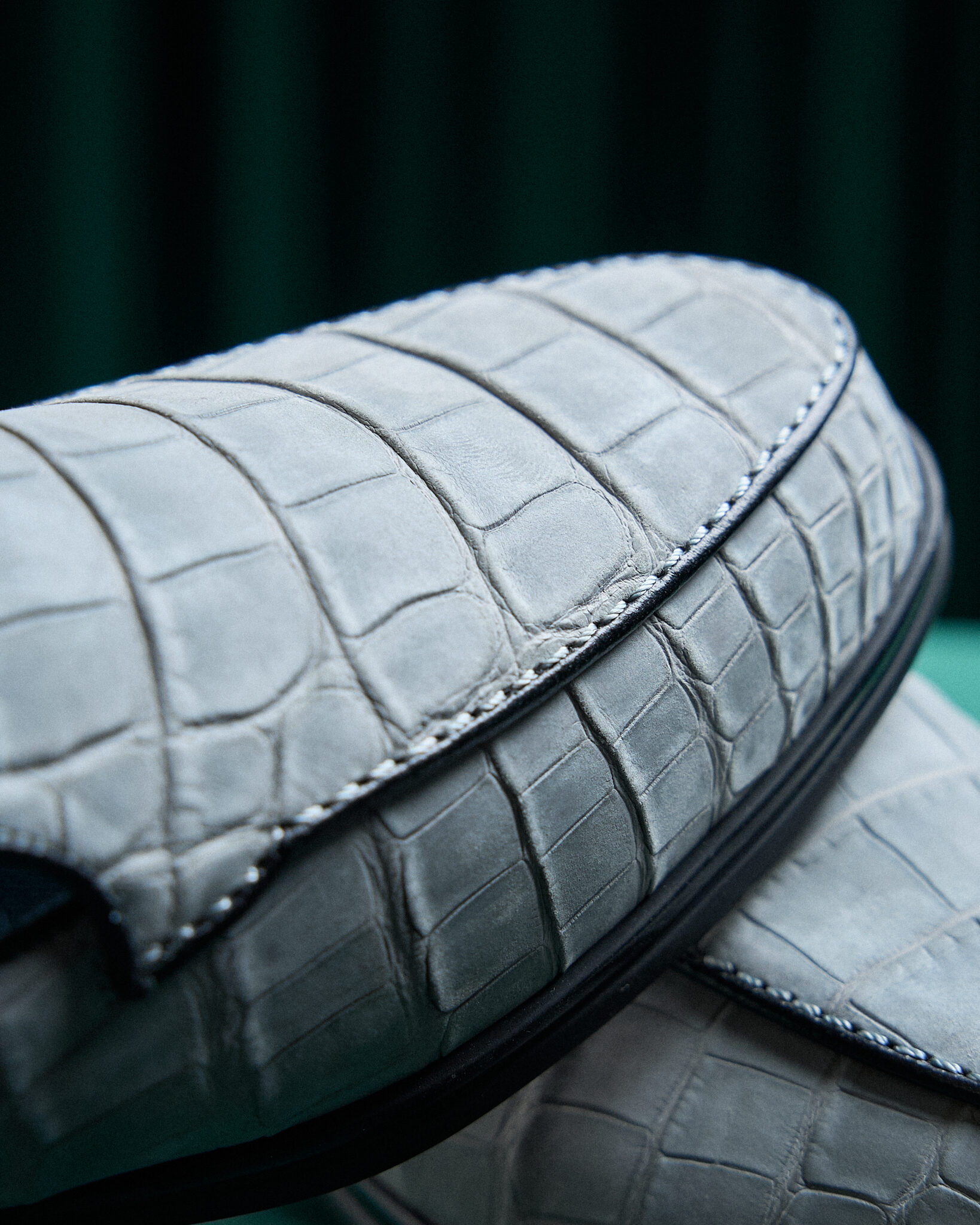
How do you pack suede shoes so they arrive clean?
Prepare them at home. Brush the nap, treat the pair with a protector spray the day before you leave and pack each shoe in its own cotton bag. Suede marks under pressure and on contact, so keep it away from other soles and crocodile edges, and never seal it in plastic, where a damp nap cannot dry.
Italian suede is the material behind most of our mules and loafers, and it is more resilient than its reputation. The real risks of a trip are mechanical: a sole pressed against the nap, a damp evening, a pair packed before it dried. Take a suede brush; it weighs almost nothing and lifts a flattened nap in a minute.
If a pair gets wet, blot it with a dry cloth, put the trees or loose paper inside and let it dry at room temperature, away from heaters and the sun, for a full day before brushing the nap back up. Salt water and heavy soaking leave mineral rings, which need the panel-wide cleaning described in our suede care guide.
In the heat, suede mules worn without socks need a day of rest between wears to dry from the inside. On a warm trip that means two pairs, worn in turn.
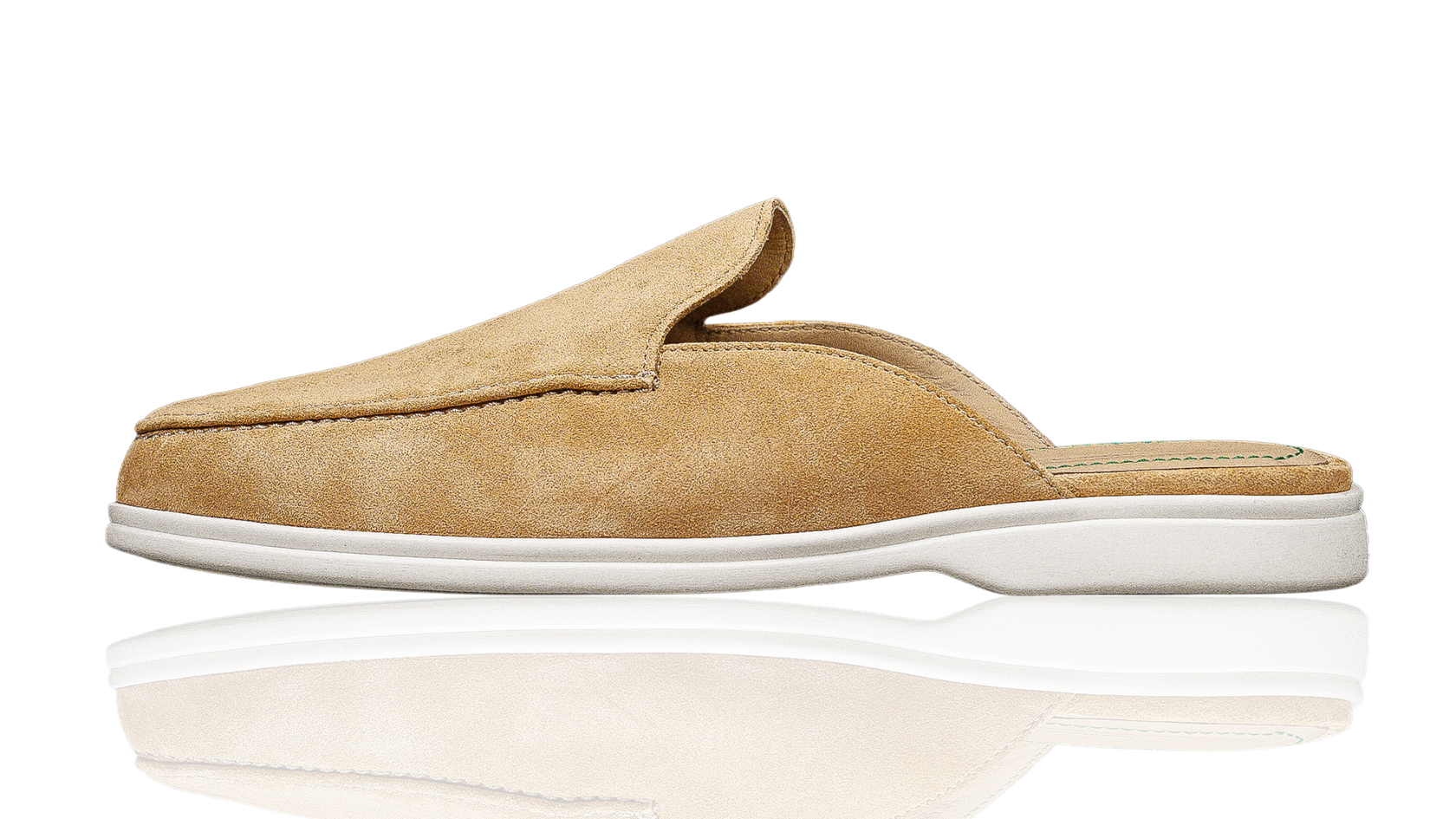
How do heat and humidity affect leather shoes on a trip?
Humidity is the bigger threat. The Canadian Conservation Institute notes that mould on leather needs relative humidity above 65% and can appear within about ten days at 80%. In Miami, December mornings average 83% humidity, so a damp pair sealed in a suitcase for a two-week holiday is a real risk.
The pace is documented. CCI Notes 8/1 states that mould generally grows after two days at 90–100% relative humidity, ten days at 80% and a hundred days at 70%. The Florida Climate Center's relative humidity normals, built on NCEI data, put Miami at 83% on December mornings and 60% in the afternoon. A closed suitcase keeps whatever moisture went into it.
Dry air is the opposite risk. The same conservators warn that leather kept below 30% relative humidity loses moisture and turns brittle, that swings in humidity do their own damage, and that direct sunlight discolours and dries it. Hotel air conditioning runs dry, and a balcony in the sun is no place for a pair between wears.
So the routine for a hot trip is simple. Never pack a pair you wore that day; let it air overnight with the trees in. In the room, keep shoes out of the suitcase, in their bags, away from the balcony door and the air-conditioning vent, and give every pair a day off between wears.
How do you go from Dubai heat to a Moscow winter without ruining your shoes?
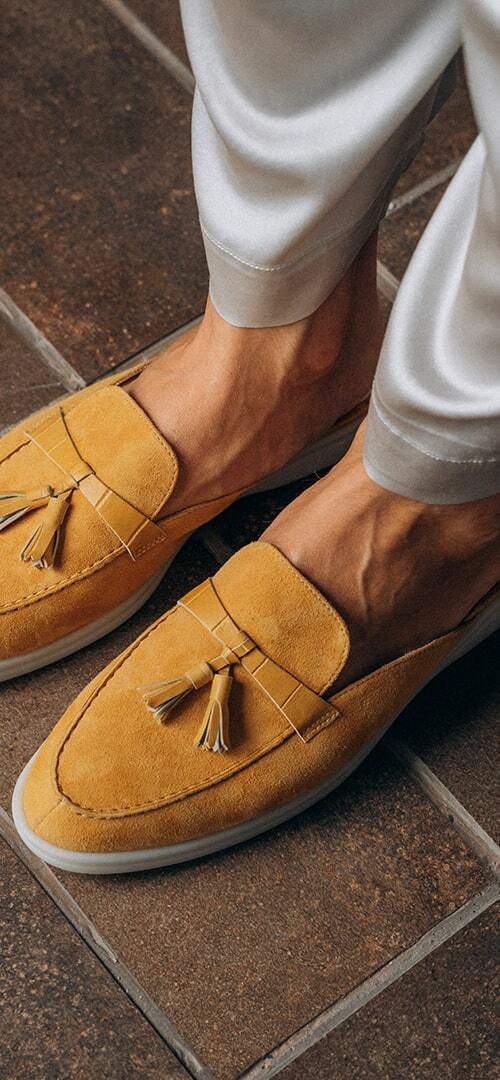
Pack for both climates and let the shoes change temperature gradually. A December day in Dubai averages a high of 26.5 °C; a December day in Moscow, −2.3 °C. Take closed loafers for Moscow, keep mules for Dubai and indoor evenings, and after the frost let each pair warm up inside its bag.
The figures come from the WMO climate normals for 1991–2020 at Dubai International Airport and the climate tables for Moscow published by Pogoda i Klimat: nearly 29 degrees between two cities a single flight apart.
A pair carried in from the frost is colder than the room, and moisture from warm air settles on cold leather. Inside its bag the shoe warms gently instead. Never dry or warm it on a radiator or a heated floor: conservators advise never storing leather over a radiator.
Winter streets bring snow and de-icing salt. Wipe the soles and the edges of the uppers with a damp cloth the same evening and let the pair dry at room temperature with the trees in. In snow, glazed and matte crocodile cope better than nubuck or unprotected suede. On the way back the rule turns around: the pair that walked through slush must be completely dry before it goes into the case for Dubai.
How do you fold a silk shirt in a suitcase without creases?
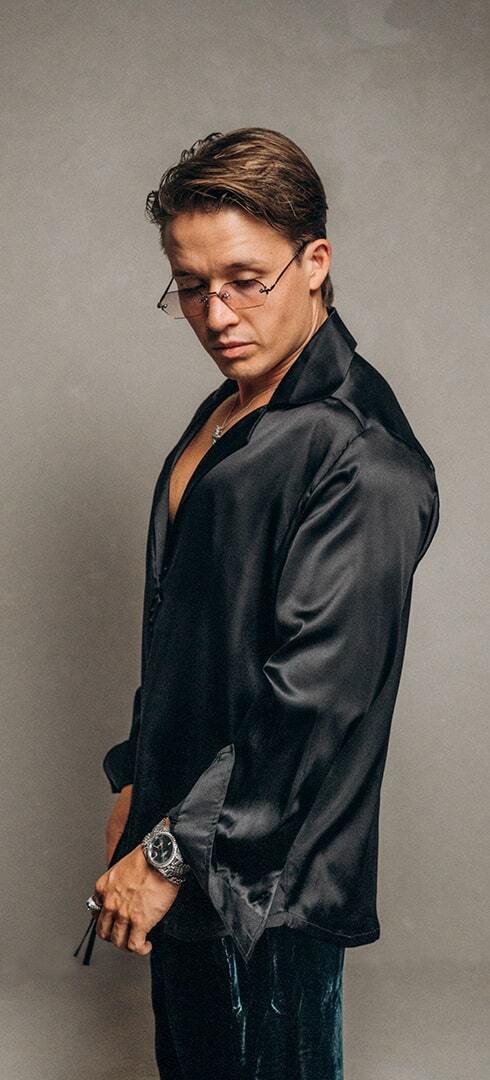
Fold it over tissue paper, so every fold becomes a soft curve instead of a crease. Button the collar and the middle of the shirt, lay it face down on tissue, fold the sleeves back along the sides, fold the body in three around more tissue and pack it last, on top of everything else.
1. Do up the top button and one in the middle, so the placket stays straight. 2. Lay the shirt face down on a sheet of tissue paper, collar at the top. 3. Fold each sleeve back along the side seam, then down along the body. 4. Fold the lower third up and the upper third down, with tissue inside each fold. 5. Turn the shirt over, collar up, and lay it on top of the case with nothing pressed onto it.
Silk creases where it is pressed into a sharp line, and tissue prevents the line. Rolling is the other method; folding suits a shirt whose collar should stay flat.
Keep a worn silk shirt apart from clean ones, in its own cotton bag: sweat and deodorant are harder on silk than dust. On arrival, unpack silk first. On a hanger most soft curves fall out within hours, and what remains yields to a hand steamer more gently than to a hotel iron. The polos of our Pure Silk 100% collection are knitted in 100% Italian silk; a knit travels folded once and flat, never on a hanger.
Which bag goes with which shoes in a travel capsule?
Match them by tone and family, not by exact colour. Crocodile shoes call for a bag in crocodile or smooth leather of a related shade with a different finish; suede mules sit well with a softer bag in a warm neutral. One structured bag and one soft bag cover almost any trip.
The travel bag has the harder journey: security trays, overhead bins, restaurant chairs. It deserves the more resilient finish, and the most delicate skin can stay at home. A cross-body keeps the hands free at the airport: the House's cross-body bag is 17 cm high and 23 cm wide, in glazed black crocodile with an orange leather lining, enough for a phone, cards, keys, glasses and a passport. Before buying any crocodile bag for travel, run the checks in my guide on how to choose a crocodile leather bag: belly scales, matched panels and a finish chosen for how you live.
How many pairs of shoes should you pack for a holiday trip?
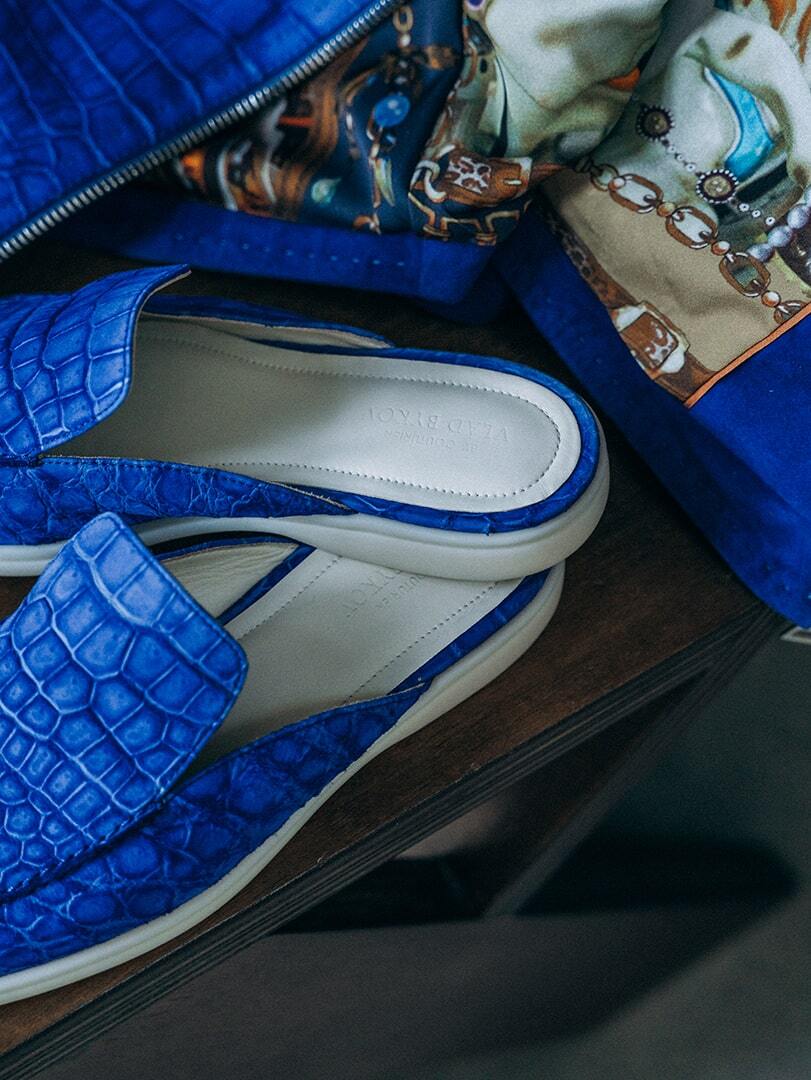
Three pairs cover most trips of one or two weeks: one closed pair worn on the plane, one for the day and one for the evening. For a warm destination two of the three can be mules; for a trip that ends in winter, the pair you wear on board should be closed loafers.
As I wrote about personal pairs of mules: "In my view, mules are the ideal shoe for a man who lives between countries, spends a lot of time in warm climates and can afford to wear a shoe with an open heel." They slip off at security and back on at the gate, and they move from a lunch on the terrace to dinner.
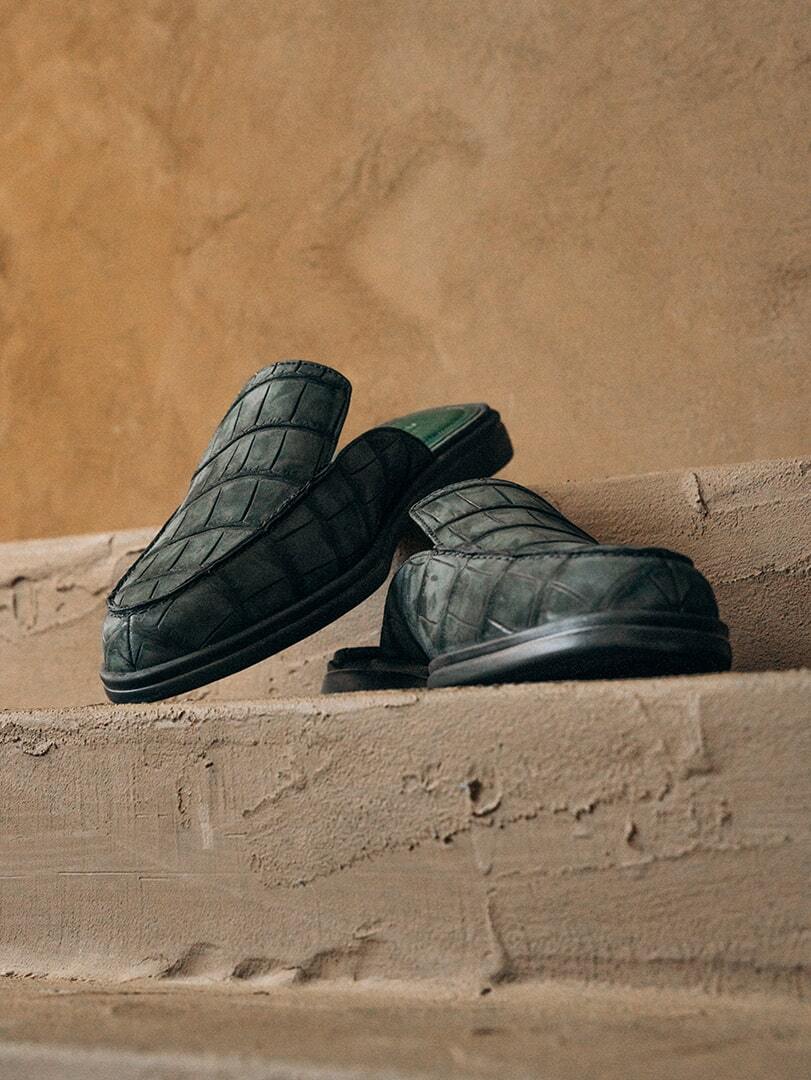
Loafers carry the rest: the flight, the city, the cold. The House makes them in Italian suede, in suede combined with crocodile and in full matte or nubuck crocodile; ready pairs are in mules and loafers. If you are buying crocodile shoes online for a December trip, start early: a pair made to your measurements takes roughly three and a half to five weeks.
Every pair is priced on request. Tell your advisor the model, colour and size through Contact or on WhatsApp, and the price comes back for your pair; consultations take place in person in Dubai or by video call.
What should you do with your shoes when you arrive?
Unpack the shoes before anything else. Take each pair out of the case, leave the trees in and let it air outside its bag for an hour. Dust crocodile along the scales, brush suede, and put a pair worn on the journey back in its bag only once it is completely dry.
Then give the shoes a place of their own: a shelf in the wardrobe, away from the balcony door and the air-conditioning vent, each pair back in its bag between wears. A hotel stay is short, and a well-packed pair should leave it in the condition it arrived in.
Frequently Asked Questions
Can I pack shoes without shoe trees?
Yes, if you fill the vamp. Tissue paper or rolled socks hold the front of the shoe against pressure on a short trip, though they shift and absorb less moisture than a tree. For crocodile, and for any trip longer than a few days, travel with trees.
Should I put shoes in plastic bags in my suitcase?
Not for the journey itself. Plastic keeps sole dirt off clothes but traps the moisture that leather and suede need to release. Use a cotton or flannel bag for each shoe, and keep a plastic bag only for a pair that is already wet, until you can dry it.
Can I pack shoes in a vacuum or compression bag?
No. Compression flattens the vamp and crushes the back of the shoe, and creases pressed in for a whole flight do not always relax. A sealed bag also locks in any moisture. Give shoes structure and space instead, even if the case holds a little less.
How do I stop shoes getting crushed in a suitcase?
Give them structure and the right position: shoe trees inside, the pairs along the walls at the wheel end, and soft clothing packed around them, so nothing shifts in transit. A case closed without force puts no weight on any vamp.
What should I do if my suede shoes get wet on holiday?
Blot them with a dry cloth, put the shoe trees or loose paper inside and leave them at room temperature, away from heaters and the sun, for a full day. Once they are completely dry, brush the nap back up and renew the protector before the next wear.
How do I get creases out of a silk shirt in a hotel room?
Hang it the moment you arrive and give it a few hours. For what remains, use a hand steamer, or hang the shirt in the bathroom while a hot shower runs. Use the hotel iron only at the setting on the label, through a pressing cloth.
Are mules good shoes for travel?
For warm destinations, yes: they slip on and off at security, pack flatter than a closed shoe and suit evenings by the water. For a trip that ends in winter or involves long walks, add closed loafers to the case.
How do I pack a leather belt for a trip?
Lay it flat along a wall of the suitcase, or in a loose roll with the buckle wrapped in a cloth. Never coil it inside a shoe: the buckle presses into the vamp, and the belt takes a tight curve it will keep.
Can I take crocodile shoes to a beach destination?
Yes, for evenings and for walking in town. Keep them off the sand and away from salt water, which is harder on leather than rain. Glazed and matte crocodile cope best; keep nubuck crocodile for dry occasions and dry floors.
What does price on request mean for VLAD BYKOV shoes?
It means the price is confirmed for your pair and is not printed on a list: the material, the model and the size set it. Your advisor quotes it individually, with a consultation in person in Dubai or by video call.
Written at VLAD BYKOV Couturier House, Dubai. About the House · Ready-to-Wear · Commission a bespoke piece · Contact · Privacy Policy
ICAO, the Canadian Conservation Institute, the World Meteorological Organization, Pogoda i Klimat and other names mentioned in this article belong to their respective owners and are referenced for context only. Mention does not imply partnership, licence or endorsement.