16.11.2026
How Long Does Bespoke Production Really Take?
How Long Does Bespoke Production Really Take?
By Vlad Bykov, Founder and Couturier, VLAD BYKOV Couturier House, Dubai · Published 16 November 2026
Most VLAD BYKOV pieces are made to order, so timing depends on the product and on how personal it is. Made-to-Order footwear takes about two-and-a-half to three weeks, measurement-based footwear three-and-a-half to five, tailoring and clothing three to four, bags four to five. A Private Order receives an individual estimate before payment.
How long does bespoke production take at VLAD BYKOV?
Because most VLAD BYKOV pieces are handcrafted to order, timing depends on the product and how personalized it is. Here are the real ranges.
Tailoring and clothing: approximately three to four weeks, depending on the piece.
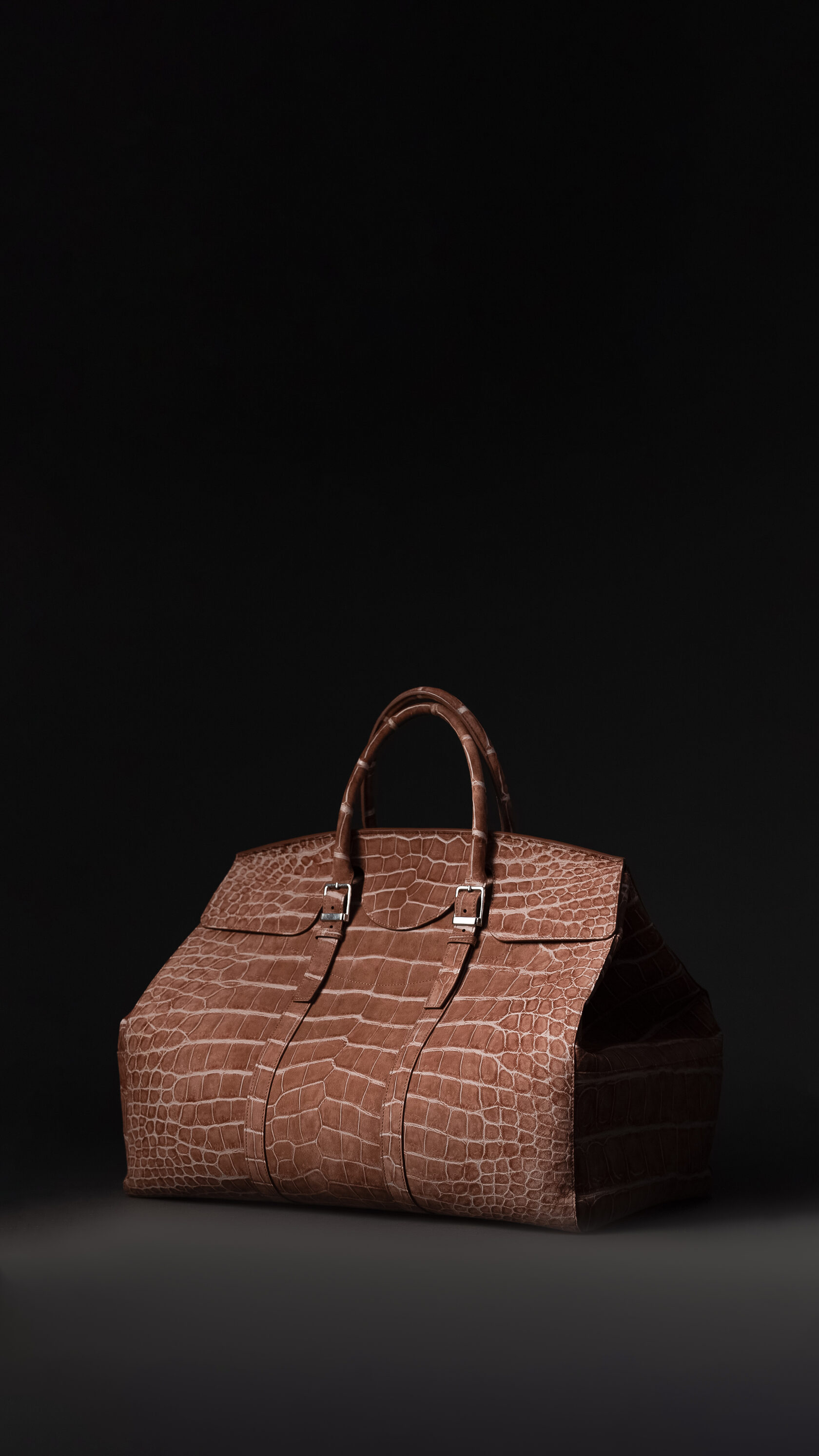
Bags: approximately four to five weeks.
These are production windows, not promises made to sound quick. They are what the House needs to make the piece properly, counted before delivery.
Why do lead times vary from pair to pair?
There's no single honest number here, and any house that gives you one exact figure for every pair is usually simplifying more than they're revealing.
What actually varies the time: the material (crocodile requires more careful cutting and pattern-matching around natural scale variation than smooth calf), the construction (a Stock or standard Made-to-Order pair moves through an established process; a Bespoke or measurement-based pair adds fitting and adjustment stages that don't exist in a standard build), and the level of personalization (initials, a special lining, a non-standard color all add distinct steps).
A single figure would be true for one configuration and misleading for every other. What can be said honestly is the outer window for each category, and that is what the table above gives.
What happens during those weeks?
What the time actually includes, broadly: pattern and material preparation, cutting (more careful and slower with exotic skins, to work around the natural pattern), upper construction and stitching, lasting (shaping the upper over the last), soling, and finishing — trimming, edge work, polishing, quality check. Each of these stages has its own skilled step, and rushing any one of them is exactly how a shoe ends up looking fine on day one and failing early.
Behind every finished pair is a sequence of distinct stages, each requiring a different skill — nothing about it happens in one motion, and nothing about it is automated.
It begins with the skin, not the last. The leather is inspected and selected for the specific commission — grade, section and, where relevant, color match — before any cutting starts, because the material dictates what's possible from that point forward.
Cutting is where grain-matching and pattern precision happen. Panels are cut to preserve the natural pattern of the skin and to fit the specific last and design — this stage rewards experience more than speed, and rushing it shows up in the finished piece.
Construction — stitching, lasting, shaping — is the longest and most skill-intensive stage. This is where the shoe actually takes form around the last, built up layer by layer rather than assembled from pre-made parts.
Finishing is the final, and often underrated, stage. Edge work, polish, final quality inspection — this is what determines whether a technically correct shoe also looks and feels genuinely finished. A pair doesn't leave the House until it passes this stage on its own merits, not on a deadline.
Why does measurement-based footwear take longer than Made-to-Order?
Footwear: Made-to-Order with material already in stock, approximately two-and-a-half to three weeks. More individual, measurement-based footwear, approximately three-and-a-half to five weeks.
Expect a slightly longer timeline, and that's the trade-off working in your favor. Measurement-based footwear runs roughly three-and-a-half to five weeks — longer than standard Made-to-Order — because the extra time is what makes the eventual fit correct rather than merely acceptable.
Why does crocodile take longer than suede?
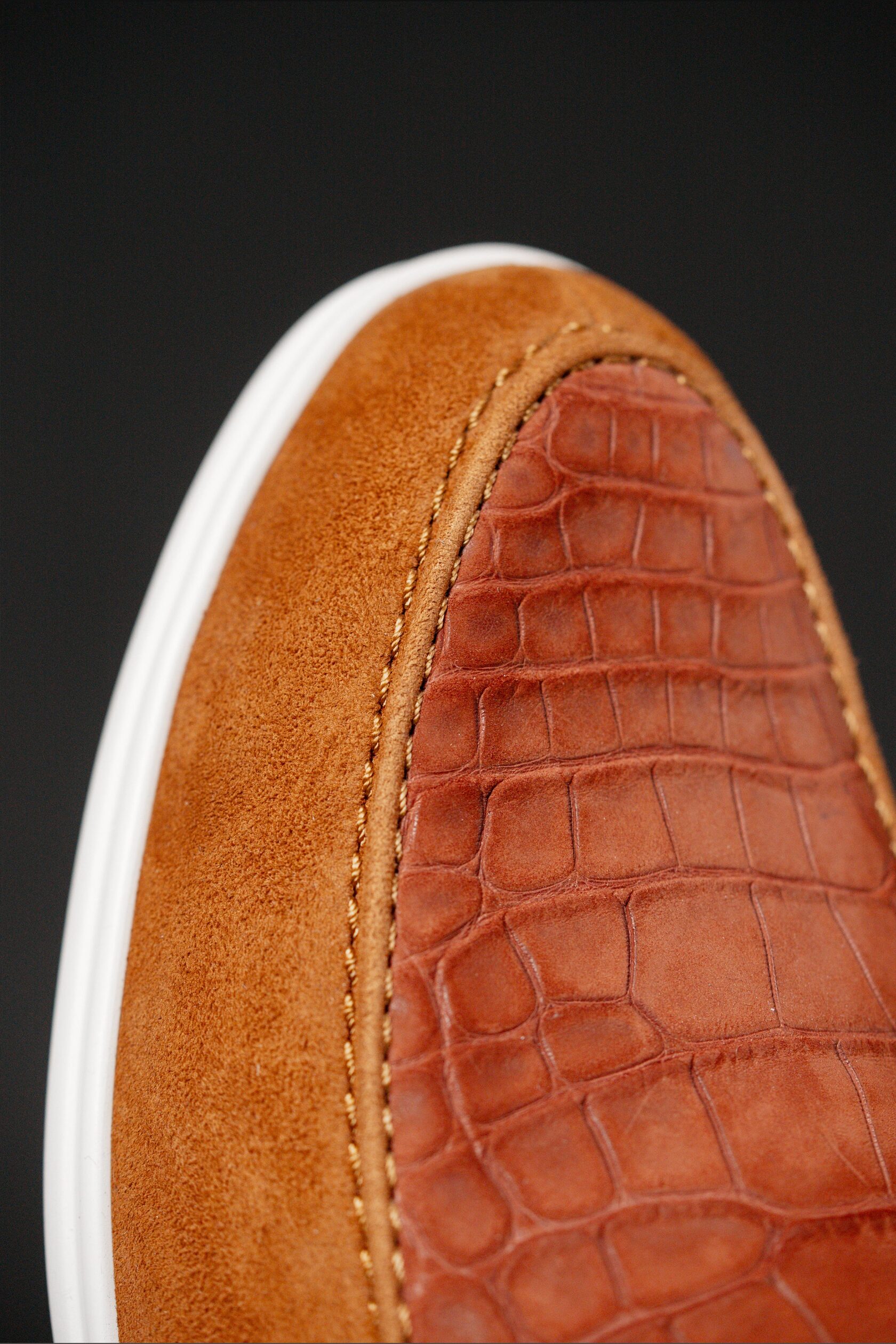
Because the skin sets the pace. Suede and smooth calf can be cut efficiently; crocodile has to be read panel by panel, so the scales run correctly across the shoe and match from one side of the pair to the other.
Waste and yield matter more than people assume. A single exotic skin yields a limited usable area, and cutting to preserve grain and pattern consistency wastes more material than an efficient industrial cutting process would — every handmade pair carries that lower yield in its price.
The same care that slows the cutting shows up in the finished pair: scales that line up at the vamp, and a pattern that reads as one skin rather than offcuts.
What makes an order take longer than the standard window?
Personalization — initials, a special lining, a specific thread color — can add roughly a week to any of the above.
Special leather, Private Order, or a newly developed material: an individual estimate, communicated before payment — this is the one category where timing genuinely can't be generalized, because it depends on sourcing.
The longest projects are the ones that start from nothing: a color developed for one guest, a skin chosen for one piece, a construction that has not been made before. Their timing is confirmed once the specification is set, and not before.
When does the production time start?
The House standard is 100% prepayment: an order enters confirmed production once payment is received and the specification is approved.
So the weeks in the table are counted from the moment both are in place: the specification agreed with your advisor and the payment received. Any consultation, measurement or test swatch that comes before it sits outside the production window.
For Stock products, delivery within the UAE can be as fast as approximately one business day, depending on location and availability — for Made-to-Order and more personalized pieces, production timing applies before delivery, generally two-and-a-half to five weeks depending on construction.
Can a bespoke order be made faster?
Not meaningfully, and the reason is the piece rather than a rule. Every stage above has its own skilled step, and the stage most often rushed elsewhere, finishing, is the one that decides whether a correct shoe also looks finished.
If you're working against a fixed date — a trip, an event — mention it when you order, and your advisor will flag early if the timeline needs adjusting.
The practical answer to a tight date is to start earlier, or to choose a Stock or Made-to-Order piece for the occasion and commission the bespoke one for afterwards.
What happens if a deadline is at risk?
If a stated timeline is ever at risk, the House will tell you before you have to ask, typically around a week before the original deadline, with what happened and a realistic revised estimate. You should never have to chase your own order.
That message comes from your advisor, the same person who confirmed the specification, so the explanation and the new date arrive together.
What if the finished piece needs adjusting?
Even with careful measuring, fit can shift slightly once a piece is finished and worn — this is a normal part of bespoke, not a failure, and the House has a straightforward process for handling it.
The first step is always a direct conversation, not a return form. Because bespoke pieces are cut to individual measurements, a fit concern is diagnosed with the guest directly — what feels off, where, and under what conditions — rather than processed as a generic return.
Some adjustments can be made to the existing piece. Depending on the construction and the nature of the issue, a shoe or garment can sometimes be adjusted without remaking it entirely — this is faster and is the House's first option where it's genuinely possible.
Where a piece needs to be remade, the House treats it as its own responsibility to get right, not an inconvenience passed back to the guest. The goal is a guest who ends up with a correctly fitting piece, not one who's simply told the order is final.
Because remaking takes time, the same production windows apply as a first order — the House would rather take the time to get it right than rush a second attempt that still doesn't fit.
Why doesn't the House simply hold more stock?
Growing demand tempts every made-to-order business with the same question: why not produce ahead of orders, hold stock, and sell faster? VLAD BYKOV's answer is no — and it's worth explaining why, plainly.
Made-to-order isn't a production bottleneck to be engineered away — it's the reason the product is good. Building to a specific guest's measurements, preferences and skin selection is structurally different from building a run of identical pairs in standard sizes and hoping they fit. The two models produce different products, not the same product at different speeds.
Mass production also changes what the House optimizes for. A workshop building 10 units at a time refines and adjusts as it goes. A workshop building 1,000 identical units optimizes for consistency and speed, which quietly narrows the quality ceiling even as the quality floor rises.
There is a real commercial cost to this position — the House could grow revenue faster by holding stock and shortening lead times. VLAD BYKOV accepts that trade-off deliberately, because the alternative would change what the House is, not just how fast it ships.
This is not a claim that mass production is illegitimate — many respected brands run on it successfully. It's a statement about what VLAD BYKOV specifically is: a House built around individual commissions, and it intends to stay that way as it scales.
To start a commission with your date in mind, write to the House through Contact or the Bespoke page.
Frequently Asked Questions
How long does a bespoke pair of shoes take at VLAD BYKOV?
Measurement-based footwear takes approximately three-and-a-half to five weeks of production. Made-to-Order footwear with material already in stock takes about two-and-a-half to three weeks. Personalization such as initials, a special lining or a specific thread color can add roughly a week.
How long does a made-to-order piece take?
Made-to-Order footwear with material already in stock takes approximately two-and-a-half to three weeks. Tailoring and clothing take about three to four weeks, depending on the piece, and bags about four to five weeks. The window is counted before delivery.
How long does bespoke clothing take?
Tailoring and clothing take approximately three to four weeks, depending on the piece. As with footwear, personalization can add roughly a week, and a special or newly developed material receives an individual estimate before payment.
When does the production time start?
Once the specification is approved and payment is received. The House works on 100% prepayment, so an order enters confirmed production only when both are in place; consultations and measurements before that sit outside the window.
Why does crocodile take longer than suede?
Crocodile requires more careful cutting and pattern-matching around natural scale variation than smooth leather. Panels are cut to preserve the pattern of the skin, a single skin yields a limited usable area, and that stage rewards experience more than speed.
Does personalization make an order longer?
Yes. Initials, a special lining or a specific thread color can add roughly a week to any production window, because each adds a distinct step to the build. A special leather or a Private Order receives its own estimate.
Can I get a bespoke order faster?
Not meaningfully, because each stage has its own skilled step and rushing one is how a shoe fails early. If you have a fixed date, mention it when you order and your advisor will flag early if the timeline needs adjusting.
What happens if my order is going to be late?
The House tells you before you have to ask, typically around a week before the original deadline, with what happened and a realistic revised estimate. You should never have to chase your own order.
Does a remake take as long as the first order?
Yes. If a piece needs to be remade after a fit problem, the same production windows apply as for a first order. Where an adjustment to the existing piece is genuinely possible, that is the first option, and it is faster.
Why does a Private Order have no fixed lead time?
Because its timing depends on sourcing. A special leather, a Private Order or a newly developed material receives an individual estimate, communicated before payment: this is the one category where timing genuinely cannot be generalized.
Written in the VLAD BYKOV atelier, Dubai. About the House · Shop · Commission a bespoke piece · Contact · Privacy Policy
Names of third parties mentioned in this article belong to their respective owners and are referenced for context only. Mention does not imply partnership, licence or endorsement.