01.10.2026
Jacob Arabo and a Pair of Personal Loafers: The Story of One Meeting
Jacob Arabo and a Pair of Personal Loafers: The Story of One Meeting
By Vlad Bykov, Founder and Couturier, VLAD BYKOV Couturier House, Dubai · Published 1 October 2026 · Updated 1 October 2026
In 2024 I met Jacob Arabo, the founder of Jacob & Co., and VLAD BYKOV Couturier House later made him personal loafers with his initials and our signature inside. I first had mules in mind, but Jacob travels constantly and more often wears closed shoes. This is the story of one pair and one detail he noticed.
How did I meet Jacob Arabo?
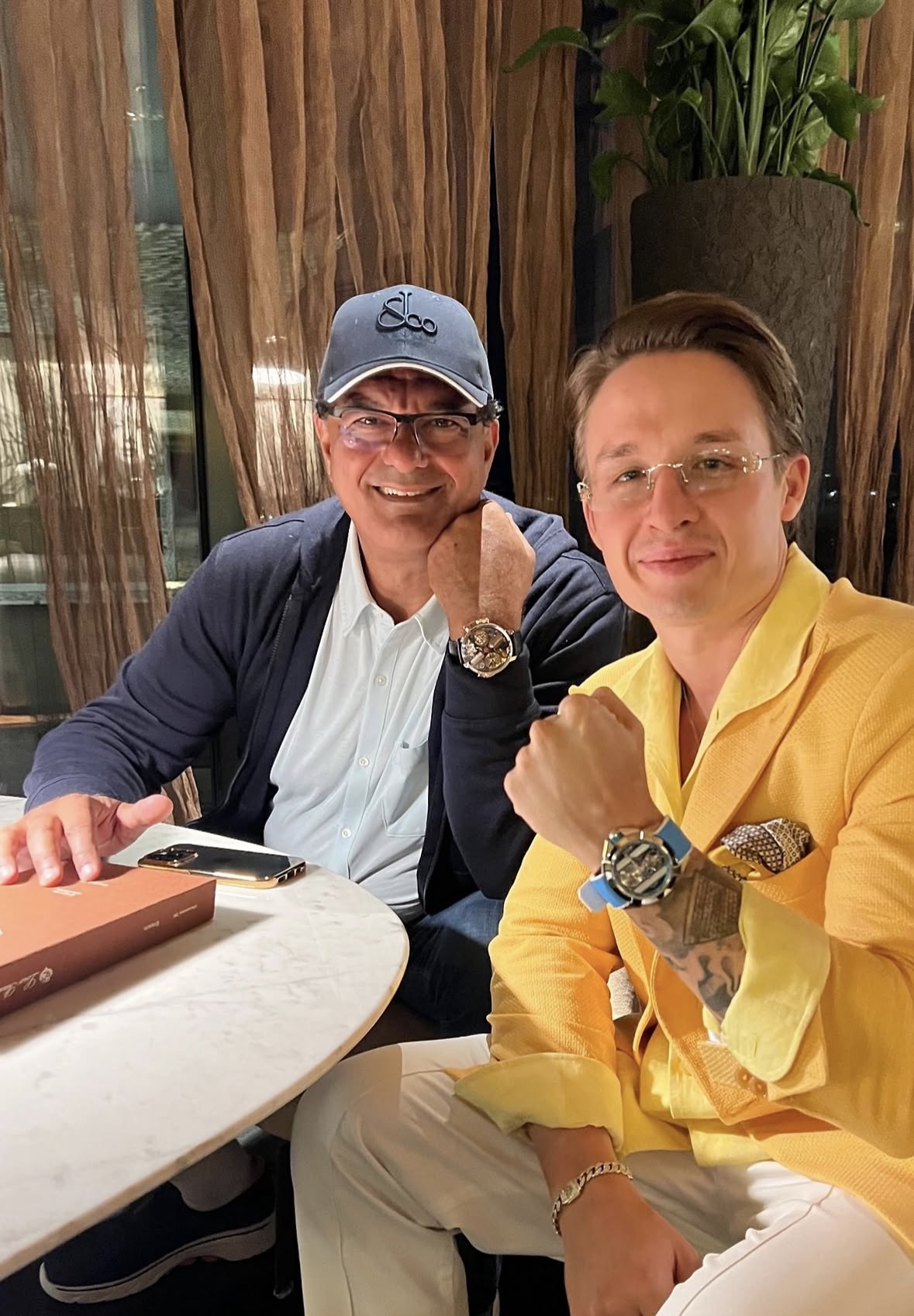
In 2024 I met Jacob Arabo, the founder of Jacob & Co. I have always liked his work: talented, bold, with a vivid character. I am a client of Jacob & Co. myself and own a watch by the House. So meeting Jacob was special for me: we met not only as two people who work in the world of design — I have long worn and valued things created by his brand.
After that first meeting we crossed paths more than once and sat at the same table. Acquaintances like this do not always form one big story with a clear beginning and continuation. Sometimes they stay in memory as separate moments: a conversation, a meeting, an attention to detail. For me, one of those stories was making a pair of shoes for Jacob.
Who is Jacob Arabo, and what is Jacob & Co. known for?
Jacob Arabo is an American jeweller and watchmaker, the founder of Jacob & Co. The House was founded in 1986 in New York, and its flagship boutique and headquarters are still in Manhattan.
His path is well documented in open sources. He was born in 1965 in Tashkent, and in 1979 his family moved to New York. At sixteen he enrolled in a jewellery-making course, worked at a jewellery factory by day and made his own pieces at night. In 1986, at twenty-one, he opened his own company and began designing for private clients under the name Jacob & Co.
The watches came later. In 2002 he released the Five Time Zone collection, watches showing several time zones at once, conceived for people who travel constantly. In 2007 he founded Jacob & Co. SA in Geneva and introduced the Quenttin, the first watch with a vertical tourbillon and a 31-day power reserve. In 2013 the Astronomia Tourbillon was shown at Baselworld; Arabo himself has called it the most important watch of the House. Since 2016 Jacob & Co. has had a boutique in Dubai.
More than twenty years passed between the jewellery course and the Geneva manufacture, and the House itself turns forty this year. When I speak about the time a person gives to his craft, this is exactly what I mean.
Why did I choose loafers and not mules?
At first I wanted to make him mules. But I was told that Jacob often wears closed shoes, because he is constantly travelling. I thought it was important to start not only from the model I would like to design, but from what would truly be close to the person and suit the way he lives.
So we settled on loafers. The pair was made individually for Jacob Arabo, with his personal initials. I wanted it to be not just a beautiful pair of shoes, but an object with a personal connection to its owner.
What is the difference between loafers and mules?
Both are slip-on and both read as effortless, but they solve different problems.
Mules are backless. That single construction choice changes everything about how they wear: faster on and off, a more relaxed silhouette, and a slightly more expressive statement. For many Guests of the House, mules are not a shoe category; they are closer to a signature.
Loafers keep the heel enclosed, which makes them the more versatile all-day option. They are better for a full day on your feet and work across a wider range of dress codes, from a linen suit to tailored trousers. If the day involves more movement, more travel and more formal settings back to back, loafers are the practical answer. If the day is built around ease and warm weather, mules are the honest one.
For a man who lives between flights, the answer is clear. The difference is set out in full in our comparison of loafers and mules.
What do we leave inside every individual pair?
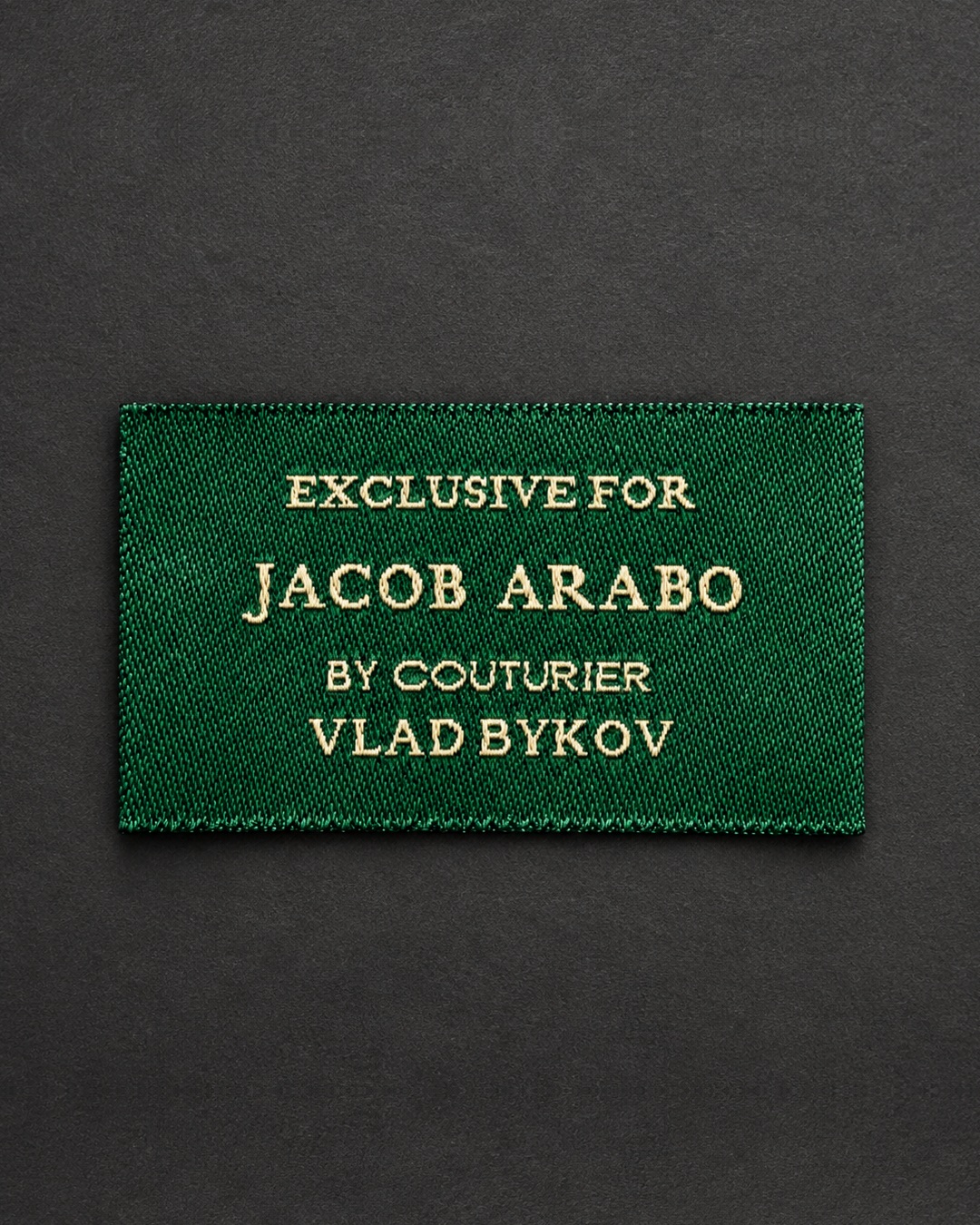
There is one detail in our work that means a great deal to me. Inside every individual pair we leave an inscription — our signature, a sign that these shoes were made for one particular person. Not simply chosen from finished models, but developed and personalised for him.
Jacob noticed that inscription and was surprised. For me it was a pleasant moment: he noticed exactly the detail that carries our hand. Others may see the pair from the outside, but this signature sits inside — it is addressed first of all to the owner. It speaks of the personal character of the piece and of exactly whom it was made for.
How does the House make a pair for one particular person?
The work starts from the person, not from a finished model. In an individual commission, fit and construction are built around measurements from the start rather than adapted from an existing last. A fitting considers not a single size number but foot width, arch height, instep and how the foot behaves under weight.
Then comes personalisation. Initials, lining colour, thread colour: details chosen for the owner. The most important of them are usually invisible from the outside; the initials sit where only he will notice them when he picks up the pair. Small, private details of this kind are what make a piece personal rather than bought off a shelf.
All of this takes time. A pair made to individual measurements takes roughly three and a half to five weeks, and personalisation can add about a week. That is longer than a standard order, and the extra time is what makes the fit correct rather than merely acceptable.
How do you travel with a pair like this?
Carefully: most damage to fine footwear happens not in wear but in the suitcase.
- Shoe trees. They hold shape against the pressure of a packed suitcase far better than paper, which shifts in transit.
- One dust bag per pair. This keeps hardware or a crocodile scale edge on one shoe from marking the finish of another.
- Shoes at the edges of the suitcase, not the centre. They are less likely to be crushed there. Place them sole to sole.
- Never pack a pair that is not fully dry. If the shoes were worn just before leaving, let them air first: damp leather or suede sealed in a bag for a long flight is a fast way to odour and mildew.
- A different climate needs different care. Flying from a dry climate into a humid one, or the reverse, pack a protector spray and reapply on arrival.
Handled this way, a pair arrives at dinner looking exactly as it did when it left the wardrobe.
How do you order personal loafers with initials?
Write to the House directly — see Contact — and tell us who the pair is for: what he wears, how he lives, which colours are close to him. The story with Jacob began with exactly that question, not with a model.
From there an advisor leads the conversation: model, material, colour, measurements and personalisation. The House makes loafers in Italian suede, in suede combined with crocodile, and in full matte or nubuck crocodile. Materials can be seen by private appointment at the House's boutique in the UAE or in Tashkent, and from any other country by video consultation.
Production begins once the specification is confirmed and the order is paid, and the finished pair ships worldwide. If the pair is needed by a date, say so at the start: the House will flag any risk to the timeline before you have to ask. Ready models are in loafers, and a commission from scratch starts from Bespoke.
Why does his story feel close to me?
It is not only Jacob's work that is close to me, but how much time a person gives to his craft in order to form his own style and name. I do not want to compare our paths or our scale. But over the years I understand more and more clearly: behind a strong brand stand long work, a great many decisions and constant attention to one's craft.
VLAD BYKOV Couturier House has entered the tenth year of its existence. Over that time I have seen for myself that building your own business means returning to it again and again: thinking over ideas, revisiting details, looking for the exact solution and continuing even when the result is not yet visible to those around you. That is why I understand the devotion I see in Jacob's work. To create a recognisable hand you need not only talent and taste, but years given to what you do.
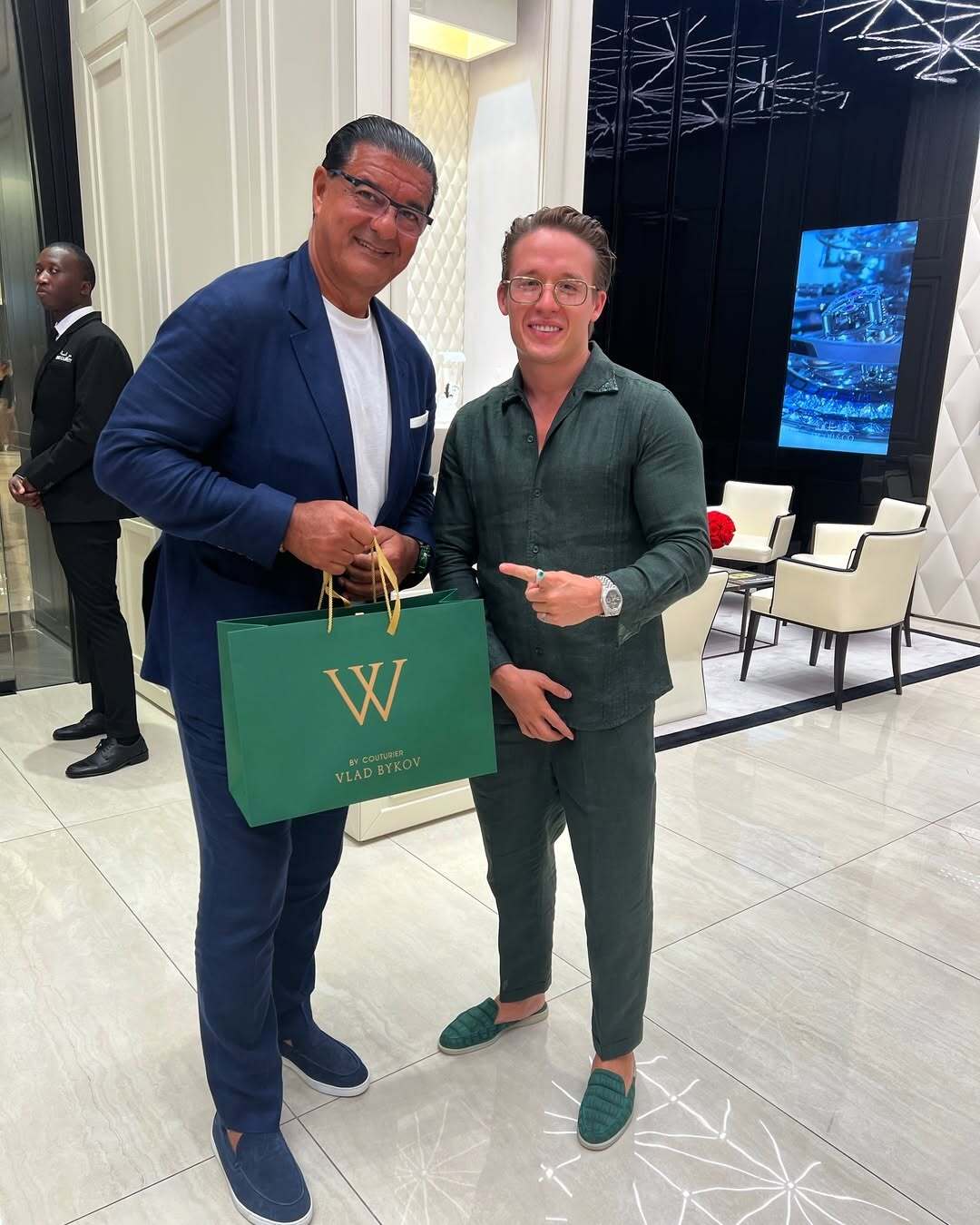
I remember this story warmly. It was a pleasure to meet Jacob more than once, to sit with him at the same table, and then to make him personal loafers with his initials and our signature inside. It is one of those personal stories that remind me why I do what I do: to make things not simply for a person, but for that person exactly.
Frequently Asked Questions
Who is Jacob Arabo?
Jacob Arabo is an American jeweller and watchmaker, the founder of Jacob & Co. Vlad Bykov describes his work as talented, bold and vivid in character, and is himself a client of Jacob & Co.: he owns a watch by the House.
What is Jacob & Co. known for?
Watches and jewellery. The House was founded by Jacob Arabo in 1986 in New York. Its watches include the Five Time Zone collection of 2002, the Quenttin of 2007 with a vertical tourbillon, and the Astronomia Tourbillon, shown at Baselworld in 2013.
When did Vlad Bykov meet Jacob Arabo?
In 2024. After the first meeting they crossed paths more than once and sat at the same table. One of the stories of that acquaintance became a personal pair of shoes made for Jacob by VLAD BYKOV Couturier House.
What shoes did VLAD BYKOV make for Jacob Arabo?
Loafers. The pair was made individually for Jacob Arabo, with his personal initials and the House's signature inside. The aim was not just a beautiful pair of shoes, but an object with a personal connection to its owner.
Why loafers and not mules for Jacob Arabo?
Vlad Bykov first wanted to make mules. But Jacob travels constantly and often wears closed shoes, so the couturier started from the way the person lives rather than from the model he wanted to design himself. That is how the choice settled on loafers.
What is the signature inside a VLAD BYKOV pair?
It is an inscription the House leaves inside every individual pair. It means the shoes were not chosen from finished models but developed and personalised for one particular person. The signature sits inside and is addressed first of all to the owner.
How did Jacob Arabo react to the pair?
He noticed the inscription inside the loafers and was surprised. For Vlad Bykov it was a pleasant moment: Jacob noticed exactly the detail that carries the hand of the House and speaks of the personal character of the piece.
Can I order VLAD BYKOV loafers with initials?
Yes. Initials, lining colour and thread colour are part of personalising an individual pair. The order goes through an advisor of the House; a pair made to measure takes roughly three and a half to five weeks, and personalisation can add about a week.
Is this a collaboration between VLAD BYKOV and Jacob & Co.?
No. It is a personal story: Vlad Bykov met Jacob Arabo, they saw each other more than once, and the House made him a pair of personal loafers. There is no joint collection or partnership between the two Houses in this story.
How old is VLAD BYKOV Couturier House?
VLAD BYKOV Couturier House has entered the tenth year of its existence. In the founder's words, those years showed him that building your own business means returning to it again and again, even when the result is not yet visible to others.
Written in the VLAD BYKOV atelier, Dubai. About the House · Shop · Commission a bespoke piece · Contact · Privacy Policy
Jacob & Co. and other names mentioned in this article belong to their respective owners and are referenced for context only. Mention does not imply partnership, licence or endorsement.